
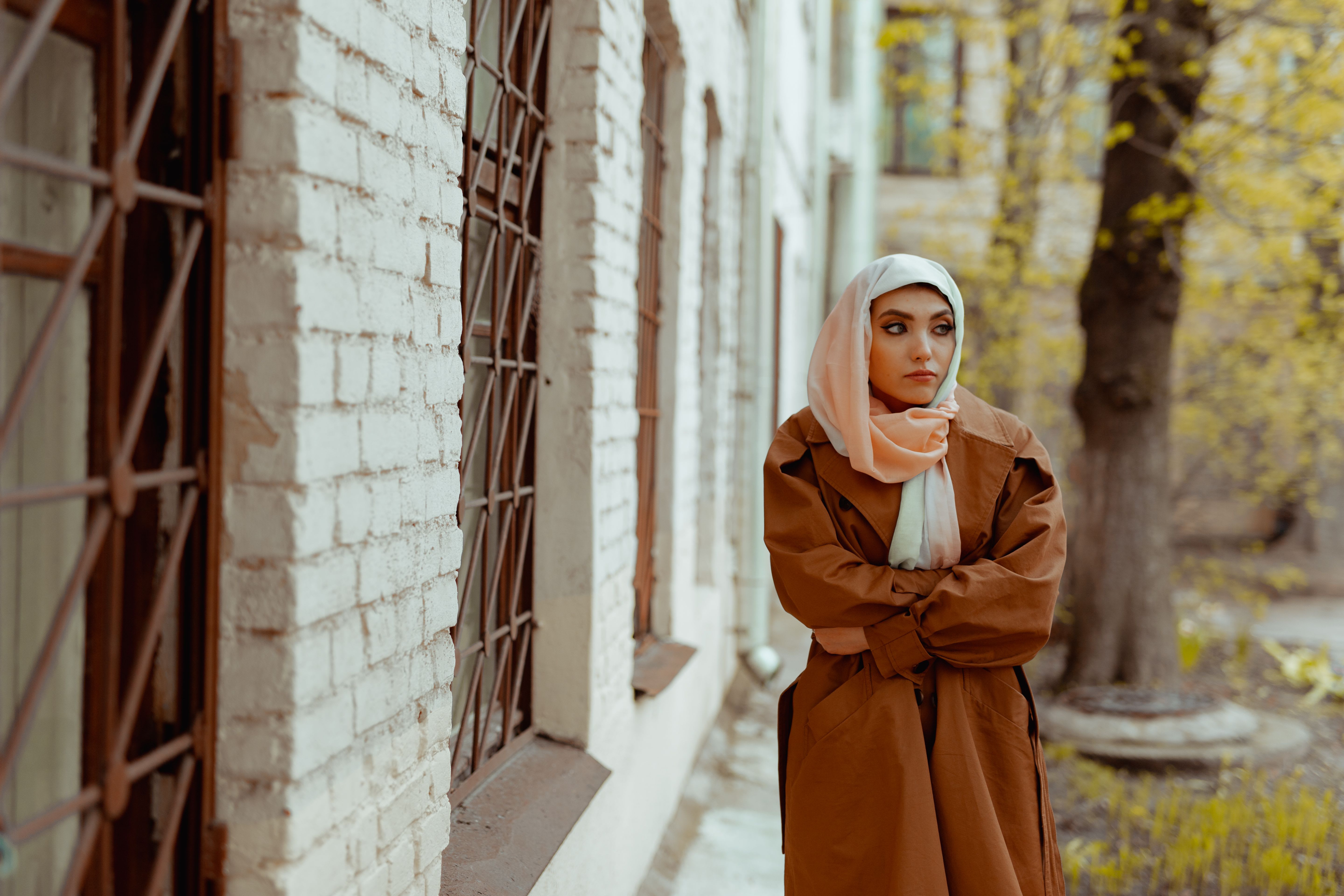

Being unmarried is not automatically haram in Islam. Whether marriage is obligatory, recommended, or simply permissible for a specific person depends on their individual circumstances — their ability to fulfil marital obligations, their fear of falling into sin, and their genuine readiness. Islam strongly encourages marriage and describes it as half of the deen — but it does not condemn every unmarried Muslim as sinning. What it does is call every Muslim who is able toward marriage as an act of worship, a protection of the self, and a contribution to the community.
Is staying single haram in Islam?
No — staying single is not categorically haram. Islamic jurisprudence classifies the ruling on marriage differently for different people based on their specific circumstances, and scholars across all four major schools agree on the basic framework.
Obligatory (wajib): Marriage becomes obligatory for a person who has strong desire, is able to provide financially, and genuinely fears falling into sin — such as zina — if they do not marry. For this person, delaying marriage when able is considered sinful.
Highly recommended (mustahabb): For most Muslims who have the ability and moderate desire, marriage is strongly recommended — the dominant ruling for the majority of practicing Muslims. Not marrying in this situation is not sinful but is missing a significant Sunnah and opportunity.
Permissible (mubah): For someone who has no desire for marriage, fears they cannot fulfil its obligations, or has genuine circumstances that make it impractical — marriage is permissible but not required.
Disliked (makruh) or prohibited (haram): For someone who genuinely cannot fulfil the rights of a spouse — financially, physically, or emotionally — and knows this, marrying may be disliked or in some scholars' view not permitted, since it would involve deliberately taking on obligations they cannot fulfil and causing harm to a spouse.
("Ibn Qudama in Al-Mughni lays out this framework with precision — the ruling on marriage is not a single universal obligation but a contextual one that varies with the individual's circumstances. This is consistent across all four major schools. The key variables are ability to fulfil marital rights, level of desire, and fear of falling into sin. None of these is determined by age or social pressure — they are internal realities that each person must assess honestly.")
What did the Prophet ﷺ say about marriage and being single?
The Prophet ﷺ spoke about marriage with consistent encouragement — and his words are among the strongest evidence that Islam views marriage not as a social obligation but as an act of worship with genuine spiritual weight.
"O young people, whoever among you is able to marry, let him do so — for it lowers the gaze and guards the private parts. And whoever is not able, let him fast, for fasting is a shield for him." (Bukhari and Muslim)
This hadith does two things simultaneously: it strongly encourages marriage for those who are able, and it explicitly acknowledges that not everyone is currently able — providing an alternative (fasting) rather than condemnation. The Prophet ﷺ did not tell those who cannot marry that they are failing. He gave them a practical tool.
"Marriage is half of the deen." (Al-Bayhaqi) Scholars interpret this to mean that marriage addresses some of the most significant sources of spiritual vulnerability — not that the unmarried Muslim is living half a religion. The unmarried Muslim who cannot currently marry is not half a person. They are a full Muslim navigating a specific season of their life.
"Whoever is able to marry and does not marry is not from us." (Al-Tabarani) This stronger statement — directed at those who are able but deliberately choose celibacy as a religious principle — is the context where scholars locate the strongest discouragement of permanent unmarried status. It addresses the person who has the ability and rejects marriage as a lifestyle choice, not the person who is sincerely searching and has not yet found the right match.
("The classical scholars consistently distinguished between three categories of unmarried Muslims: those who are genuinely unable at present, those who are searching sincerely and have not yet succeeded, and those who are deliberately avoiding marriage despite ability. The first two receive encouragement and practical guidance. The third receives the stronger discouragement expressed in the Al-Tabarani narration. Applying the stronger discouragement to the first two categories is a misreading of the tradition that causes unnecessary guilt and spiritual harm.")
Does Islam view celibacy the way some other religions do?
No — and this distinction is worth understanding clearly because it shapes how Islam approaches the unmarried Muslim very differently from some other religious traditions.
Christianity, in its Catholic and some monastic Protestant traditions, has historically elevated celibacy as a higher spiritual state — the path of the clergy and the religious life, considered closer to God than the married state.
Islam rejects this framing entirely. The Prophet ﷺ said: "There is no rahbaniyyah in Islam." (Ahmad) — meaning there is no monasticism, no elevation of celibacy as a spiritual ideal. When some companions discussed abstaining from marriage as a form of spiritual devotion, the Prophet ﷺ corrected them directly: "I fast and I break the fast. I pray and I sleep. And I marry women. Whoever turns away from my Sunnah is not from me." (Bukhari and Muslim)
This is a direct statement that the married life — with all its ordinary, unglamorous, relational demands — is the Prophetic model. Not celibacy. Not monasticism. The full human life, including marriage, conducted with Islamic intention.
Being single in Islam is therefore not a spiritually elevated state. It is a circumstance — sometimes temporary, sometimes extended, always navigable — not an aspiration.
Is there sin in being unmarried if you genuinely want to marry but haven't found the right person?
No — and this is the question most Muslim singles are actually asking, beneath the surface of "is being unmarried haram?"
A Muslim who genuinely wants to marry, who is making sincere effort to find a suitable spouse, and who has not yet found one is not sinning by being unmarried. They are in a season of waiting and searching — one that Islam acknowledges, accommodates, and provides guidance for.
The Prophet ﷺ's hadith is clear: whoever is not able should fast. "Not able" encompasses the person who wants to marry but has not yet found a suitable partner — not only the person who is financially unable. The provision of an alternative recognises that the gap between wanting to marry and being married is real and is not always quickly closed.
("A 2024 Yaqeen Institute survey of Muslim singles in North America found that 61% reported feeling guilty about being unmarried — with the majority citing pressure from family and community rather than a personal sense of religious failure. Islamic scholarship does not support this guilt for the person who is sincerely searching. The guilt that Islamic guidance places on the unmarried Muslim is specifically directed at the one who is able and deliberately avoiding marriage as a lifestyle preference — not at the one who is genuinely seeking and has not yet found.")
The distinction that matters: are you genuinely pursuing marriage — making real effort, being honest in your search, taking opportunities seriously — or are you using the framing of "not finding the right person" to avoid the discomfort of actually engaging with the process?
Only you and Allah know the honest answer to that question.
What does Islam say to do while unmarried?
The Islamic tradition is not silent on what the unmarried Muslim should be doing while they search. It is, in fact, quite specific.
Fast. The Prophet ﷺ's instruction is direct and practical — fasting is a shield, a tool for lowering desire and maintaining discipline. Regular fasting for the unmarried Muslim who struggles with this season is a Prophetically prescribed tool, not a punishment.
Lower the gaze. The instruction of Surah An-Nur 24:30-31 — to lower the gaze and guard modesty — is addressed to all believing men and women, regardless of marital status. It is a continuous practice, not a temporary measure until marriage.
Stay actively in community. Islam is not a private, individual religion — it is lived in community. The unmarried Muslim who withdraws from the mosque, the volunteer project, the Muslim social network is making their situation harder and their search less effective simultaneously. Presence in good community is both spiritually protective and practically useful.
Pursue marriage actively and sincerely. The unmarried Muslim who is genuinely searching — who is on a matrimonial platform, who has told their family they are looking, who is attending community events and taking rishta meetings seriously — is fulfilling their obligation. The unmarried Muslim who is waiting passively for something to happen while not actually doing anything is not.
Develop character while you wait. The waiting period is not wasted time. It is the period in which the qualities that make a good spouse — patience, emotional maturity, genuine kindness, consistency in deen — are built. A person who arrives at marriage having spent their single years developing these qualities is a significantly better spouse than one who simply waited.
How do you handle the social pressure of being unmarried as a Muslim?
The pressure is real — family, community, culture, and sometimes personal anxiety all converge on the unmarried Muslim in ways that can feel relentless. Islam has something to say about this too.
The pressure is not the same as the obligation. Understanding the actual Islamic ruling — that being unmarried while sincerely searching is not a sin — does not make the pressure disappear. But it does allow you to hold it differently. You are not failing Islamically. You are navigating a cultural pressure that has been incorrectly framed as a religious one.
Tawakkul is not passivity. Trusting Allah while also taking genuine action is the Islamic model — not one or the other. The person who says "I'm leaving it to Allah" while making no real effort to search is not practising tawakkul. They are practising avoidance dressed in Islamic language. The person who makes genuine effort and trusts Allah with the outcome is practising what the hadith of tying the camel and then trusting in Allah actually describes.
Dua is the most underused resource. The duas for a righteous spouse — the dua of Zakariyya (AS), the dua of Surah Al-Furqan 25:74 — are not last resorts. They are the primary resource of a Muslim who has remembered where provision ultimately comes from. Making them consistently, sincerely, and with genuine expectation that Allah responds is not naive. It is the Muslim's most essential tool.
("The dua of Musa (AS) in Surah Al-Qasas 28:24 — 'My Lord, indeed I am, for whatever good You would send down to me, in need' — was made at a moment of complete vulnerability, alone in a foreign land with nothing. Within hours of making it, his situation changed entirely. The speed of that answer is not a guarantee that every dua is answered immediately. It is a reminder that Allah's provision does not operate on human timelines — and that sincere need expressed to Him is never ignored.")
How Soul Deeds helps Muslims who are sincerely searching
Soul Deeds exists for exactly the Muslim this article is written for — the one who genuinely wants to marry, who is taking it seriously, who is not avoiding the process, and who has not yet found the right person.
The Community Giving Circle model creates a context where the search is not a separate, anxious, compartmentalised activity — it is woven into genuine community involvement, genuine service, and genuine expression of the values that matter. Two people who meet through shared volunteer work are meeting on the basis of what they actually are, not what they have curated for a profile.
Soul Deeds also provides access to imams and marriage advisors through in-app booking — for unmarried Muslims who want Islamic guidance on their search, their readiness, or the specific questions their situation raises.
The search for a spouse is an act of worship when it is conducted with genuine intent, Islamic boundaries, and trust in Allah's provision. Soul Deeds is built for that search.
Frequently Asked Questions
At what age does it become obligatory to get married in Islam? There is no age at which marriage becomes obligatory in Islamic law. The obligation is tied to ability and fear of sin — not to age. A 22-year-old who is financially unable and has no strong desire is not obligated to marry. A 35-year-old who is able, has strong desire, and fears sin is. Age creates social pressure. It does not, by itself, change the Islamic ruling.
Is it a sin to be unmarried at 30 or 35 as a Muslim? Not if you are sincerely searching and have not yet found a suitable match. The Islamic ruling on marriage is contextual — not chronological. A Muslim at 35 who is genuinely pursuing marriage with honest intent is not sinning by being unmarried. A Muslim at 35 who is able, desires marriage, and is not making any genuine effort is in a different position — not because of their age, but because of their conduct.
Does being unmarried affect your status in Islam? No. Your status before Allah is determined by your taqwa — your consciousness of Him and your effort to live according to His guidance. Being married or unmarried is a circumstance of your life, not a measure of your worth before Allah. The most noble of you in the sight of Allah is the most righteous — not the most quickly married. (Surah Al-Hujurat, 49:13)
Is Soul Deeds a dating app? No. Soul Deeds is a Muslim matrimonial platform for people seriously seeking marriage. Members are verified, and connections form through shared community service projects rather than swiping.
Can Soul Deeds help me if I have been searching for a long time without success? Yes. Soul Deeds is specifically built for sincere seekers — verified members, character-observable through community service, with access to imams and marriage advisors for guidance on the search. The platform's model addresses the structural limitations of other approaches that may not have worked.
Is Soul Deeds free? Yes — Soul Deeds is free to join, on iOS, Android, and the web.