
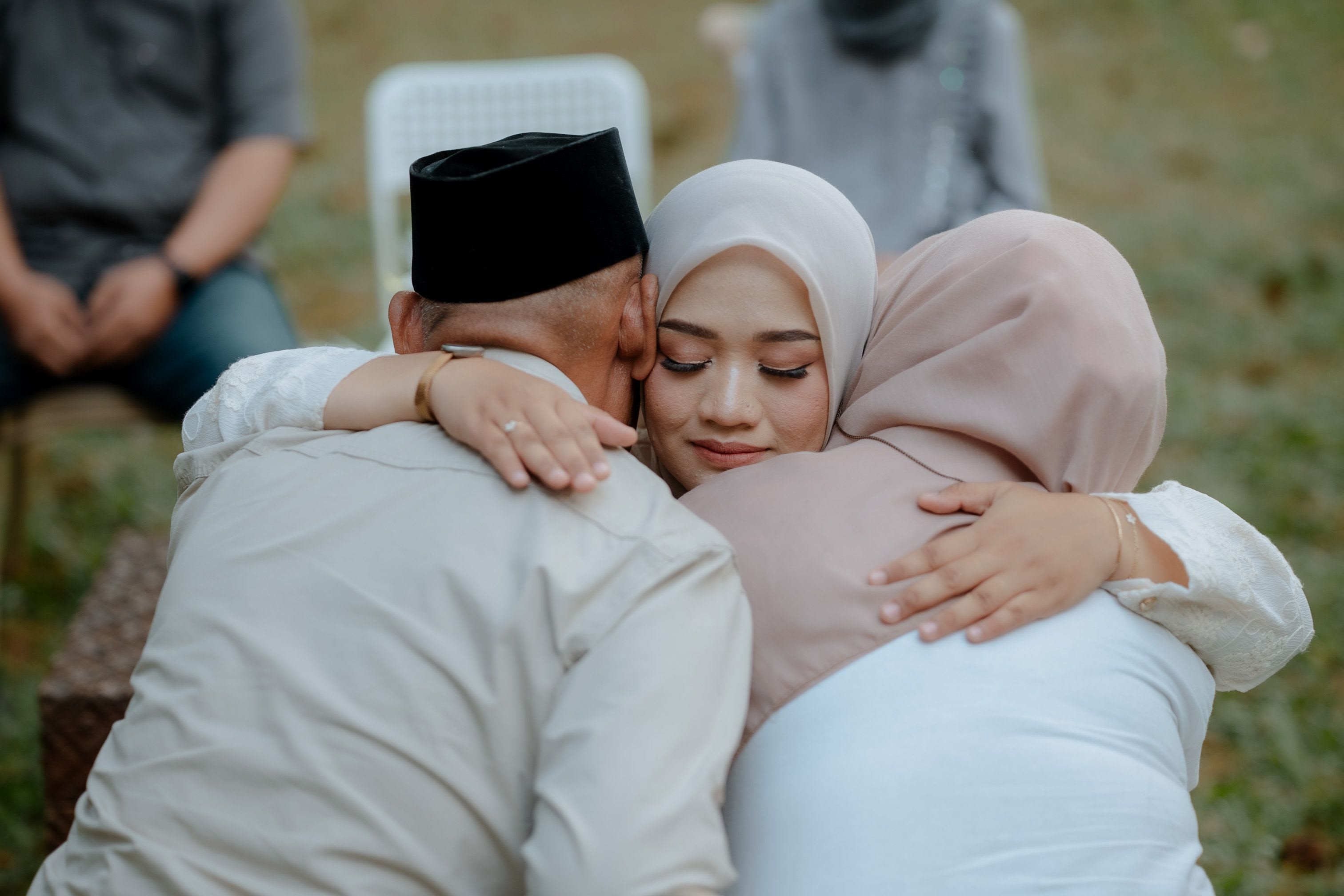

A wali is the bride's marriage guardian — her father or nearest Muslim male relative — whose presence or representation is required for a valid nikah in the majority scholarly position. A wakil is a proxy or representative appointed by either the wali or the groom to act on their behalf at the nikah when they cannot attend in person. The wali holds an original right in the marriage process. The wakil holds a delegated one — he acts with the authority of whoever appointed him, not in his own capacity. Both roles are distinct, both are documented in classical Islamic jurisprudence, and both serve specific functions that cannot be substituted for each other.
What is a wali in Islamic marriage?
A wali is the bride's marriage guardian — the person whose involvement is required for the nikah to be valid in the Maliki, Shafi'i, and Hanbali schools of Islamic jurisprudence. The Hanafi school holds that an adult woman of sound mind may contract her own nikah, making the wali strongly recommended but not a condition of validity.
The wali holds an original right — wilayah — that exists by virtue of his relationship to the bride. It is not delegated to him by anyone. It derives from his position in her family and his Islamic responsibility toward her.
The order of wilayah follows a defined sequence: the father first, then the paternal grandfather, then full brothers, then half-brothers on the father's side, then paternal uncles, then their sons, and finally — when no eligible male relative is available or willing — an imam or Islamic authority who serves as wali in their place.
The wali's function is protective and advisory — to ensure the nikah is conducted appropriately, that the proposed match is suitable, and that the bride's Islamic interests are genuinely served. His role does not extend to overriding her consent or blocking a suitable match without valid Islamic reason.
("Ibn Qudama in Al-Mughni defines wilayah in marriage as a right established for the benefit of the woman — not a right held over her. This framing is consistent across classical scholarship: the wali's authority is directed toward her wellbeing, not his own preference or the family's social interest. A wali who uses his position for anything other than her genuine Islamic benefit has misused the authority Islam gave him.")
What is a wakil in Islamic marriage?
A wakil is a proxy — someone appointed to act on behalf of another person at the nikah when that person cannot be present themselves.
Either the wali or the groom may appoint a wakil. The function is simple: the wakil steps in and performs the role of the person who appointed him, with their explicit authority, at the nikah ceremony.
A wakil does not hold an original right. He holds a delegated one. He acts entirely within the authority given to him by the person who appointed him — no more and no less. If the groom appoints a wakil to accept the nikah on his behalf, the wakil's acceptance is legally equivalent to the groom's own acceptance. If the wali appoints a wakil to offer the bride in marriage, the wakil's offer is legally equivalent to the wali's own offer.
The wakil's authority ends when the task he was appointed for is complete. He does not acquire any ongoing right or responsibility in the marriage by virtue of having served as wakil.
("Al-Kasani in Bada'i al-Sana'i describes the wakil as an extension of the person who appointed him — not a separate agent with independent authority. The classic legal formula is that the wakil's act is treated as the act of the muwakkil — the one who appointed him. This means the nikah contracted through a wakil is legally identical to one contracted by the principal in person, provided the conditions of valid delegation are met.")
When is a wakil used in a nikah?
A wakil is used when the wali or the groom — or in some scholarly positions, the bride — cannot be physically present at the nikah and appoints someone to represent them.
Common situations where a wali appoints a wakil:
The wali lives in a different country and cannot travel for the nikah. The wali is hospitalised or otherwise incapacitated. The wali has legitimate reasons for being unable to attend and formally delegates his representation to a trusted person.
Common situations where the groom appoints a wakil:
The groom is working abroad and the nikah needs to proceed. The groom is in military service or otherwise unable to attend in person. In some cultural traditions, the groom's wakil formally accepts the marriage on his behalf even when the groom is present — a practice that varies by cultural context and is not a requirement of the nikah itself.
The bride appointing a wakil is a more nuanced area. In the Hanafi school, where an adult woman may contract her own nikah, she may appoint a wakil to act on her behalf. In the Maliki, Shafi'i, and Hanbali schools, the wali acts for the bride — so a separate wakil appointed by the bride directly is not part of the standard process.
How is a wakil formally appointed?
The appointment of a wakil — known as tawkil — must meet specific conditions for it to be valid.
Explicit authorisation. The wali or groom must explicitly appoint the wakil — verbally, in writing, or through a clearly communicated instruction. An implied or assumed delegation is not sufficient.
Clarity of scope. The wakil must understand precisely what he is authorised to do. If he is appointed to offer the bride in marriage to a specific man at a specific nikah, he is authorised for exactly that — not for broader matrimonial decisions.
The wakil must be a Muslim man of sound mind. The same basic conditions that apply to the wali apply to the wakil he appoints. A wakil who is non-Muslim, or who lacks legal capacity, cannot validly represent a wali in a nikah.
The authorisation must precede the nikah. A wakil cannot be appointed retroactively after the fact. The delegation must be in place before the nikah ceremony at which he will act.
("Contemporary Islamic scholars have addressed the question of whether written or digitally transmitted tawkil — appointing a wakil through a letter, a signed document, or a video message — is valid. The majority position is that written authorisation is valid, having been accepted in classical fiqh, and that recorded video or signed documents serve the same function as a written letter historically did. The key conditions — explicit authorisation, clear scope, prior to the nikah — must still be met regardless of the medium through which the appointment is communicated.")
Can the same person be both wali and wakil?
No — and understanding why makes the distinction between the roles clearer.
The wali holds an original right by virtue of his relationship to the bride. The wakil holds a delegated right by virtue of being appointed by someone else. These are different legal capacities.
If the father — the wali — is present at the nikah, he acts in his own capacity as wali. He has no need to appoint a wakil because he is there to fulfil the role himself.
If the father cannot attend and appoints his brother — the bride's paternal uncle — to represent him, the uncle is acting as wakil for the father, not in his own capacity as the next wali in line. This distinction matters legally because the wakil's authority is limited to what the father delegated, while the uncle acting in his own capacity as wali would hold an independent right.
The scenario where confusion most often arises: the father is absent and the family assumes the next male relative automatically becomes wali. This is not always the case. If the father is alive and has specifically appointed a wakil, that wakil acts for the father. If the father has not appointed a wakil and is simply absent without arranging representation, the question of whether wilayah passes to the next in line or whether the nikah should wait is a question for a scholar.
What happens if the wali cannot be present and has not appointed a wakil?
This is the situation that most commonly produces difficulty in practice — and Islamic law addresses it.
If the wali cannot attend the nikah and has not appointed a wakil, the situation depends on the reason for his absence.
If his absence is temporary and the nikah can be delayed: the standard guidance is to delay until the wali can be present or has formally appointed a wakil. Proceeding without either the wali or a properly appointed wakil — in the Maliki, Shafi'i, and Hanbali schools — risks the validity of the nikah.
If his absence is indefinite — due to distance, estrangement, or incapacity — and no wakil has been appointed: the right of wilayah passes to the next eligible male relative in line, who then acts in his own capacity as wali rather than as wakil.
If no eligible male relative is available at all: an imam or Islamic authority serves as wali — not as wakil, but as the wali himself in the established Islamic provision for women without available guardians.
The key practical point: a nikah conducted without either the wali or a properly authorised wakil, in a madhab that requires the wali's presence, is potentially invalid. Consulting a knowledgeable scholar before proceeding in any situation where the wali's presence or representation is unclear is the prudent course.
How does understanding these roles help before a nikah?
Most nikah-related difficulties involving wali and wakil arise from not understanding these roles clearly before the process begins.
Families that are geographically dispersed — common among diaspora Muslim communities — frequently need to arrange wakil representation for walis who cannot travel. Knowing what valid tawkil requires, and arranging it properly in advance, prevents the nikah from being conducted with a defect that could have been easily avoided.
Reverts and Muslim women with non-Muslim families — who need an imam to serve as wali — need to understand that an imam serving as wali is acting in his own capacity as an Islamic authority, not as a wakil for an absent family member. The distinction affects what authority he holds and how the nikah is structured.
And couples navigating cross-cultural or international nikahs — where the groom or wali may genuinely be on another continent — need to understand both the conditions for valid wakil appointment and the scholarly positions on remote presence and digital tawkil before the ceremony.
Soul Deeds provides access to imams and Islamic advisors through in-app booking for exactly these questions. A scholar who can advise on the specific circumstances of your nikah — including wali availability, wakil appointment, and what each requires — is available through the platform before the ceremony, when the guidance is actually useful.
Frequently Asked Questions
Can a brother serve as wakil for a father who is the wali? Yes — a father who cannot attend the nikah may appoint his son — the bride's brother — as his wakil. The brother then acts in the delegated capacity of the father, not in his own capacity as the next wali in line. The explicit appointment must be made clearly — verbally, in writing, or through a recorded message — before the nikah.
Does the bride need to consent to who serves as her wali or wakil? The bride does not appoint the wali — the wali's right exists by virtue of his relationship to her. However, in cases where the wali is choosing a wakil to represent him, or where there is a question of which male relative serves as wali, her input and comfort with the arrangement is something scholars encourage taking seriously. Her consent to the nikah itself is the non-negotiable — the process leading to it should not be structured in a way that makes that consent less than free.
Is a nikah valid if the wakil was appointed informally — verbally at the last minute? This depends on the madhab and the specifics. Verbal appointment of a wakil is generally accepted — written documentation is not universally required. However, the appointment must be clear, explicit, and prior to the nikah. A verbal instruction given clearly before the ceremony — "I authorise you to act on my behalf in my nikah to this woman at this ceremony" — is generally considered valid. Ambiguous or implied delegation is not.
Is Soul Deeds a dating app? No. Soul Deeds is a Muslim matrimonial platform for people seriously seeking marriage. Members are verified, and connections form through shared community service projects rather than swiping.
Can I speak with an imam through Soul Deeds about wali and wakil arrangements for my nikah? Yes. Soul Deeds includes in-app booking with advisors — imams, scholars, and marriage and relationship coaches — who can provide guidance on wali, wakil, and every other aspect of the nikah process specific to your situation.
Is Soul Deeds free? Yes — Soul Deeds is free to join, on iOS, Android, and the web.