
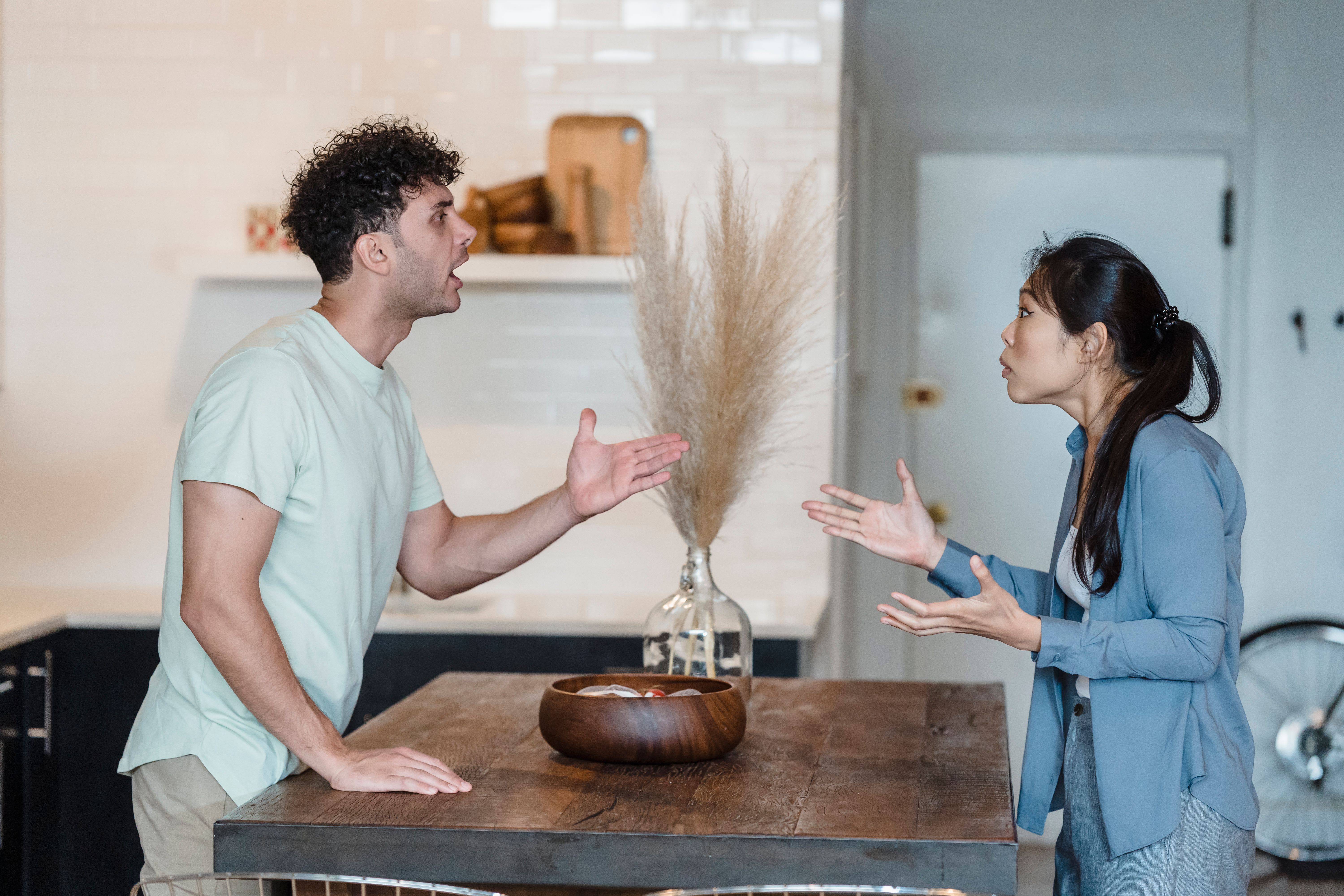

Here is the conversation Muslim communities are not having about the divorce rate.
It is not about lack of love. Most couples who separate were not lying when they stood at the nikah. They genuinely wanted it to work. They made dua for it. Their families celebrated it.
But somewhere in year two or three, something became clear that was not clear before. He assumed certain things would be a certain way. She assumed she had left certain things behind. And those two sets of assumptions — unspoken, inherited, completely sincere — began to grind against each other in the ordinary friction of daily life.
He wants to live the way his father lived. She is not willing to suffer the way her mother suffered. And nobody told either of them that this was the real conversation they needed to have before the nikah.
Key Takeaways
- Many Muslim marriages break down not from lack of love but from inherited expectations that neither person examined before committing
- Men who grew up watching one model of marriage often unconsciously recreate it — even when they are better men than their fathers were
- Women who watched their mothers carry everything silently have decided they will not — and this is not a betrayal of Islam, it is a rejection of what was never Islamic to begin with
- The marriage that lasts is built on honest conversation about expectations, genuine partnership in service, and a shared Islamic frame — not a repeat of the previous generation
What the Previous Generation's Marriage Actually Looked Like
This is uncomfortable to say plainly. Most of us loved our parents. Most of our parents loved each other, in whatever way they knew how.
But love and a healthy marriage are not the same thing.
Many Muslim marriages of the previous generation — particularly in South Asian, Arab, and African diaspora communities — operated on a model that was not fully Islamic, even when it looked Islamic from the outside. The husband provided financially and considered that his job complete. The wife managed the household, raised the children, managed her own loneliness, and absorbed the emotional labour of the entire family without complaint — because complaining was not what good wives did.
He came home to a cooked meal and peace. She had been navigating a full day of children, in-laws, isolation, and unacknowledged difficulty, and she presented none of it because she had been raised to understand that her feelings were not the priority.
This was not the Prophetic model. The Prophet ﷺ helped with household tasks. He was emotionally present with his wives. He listened. He expressed love explicitly. He did not arrive home and consider his obligations complete because he had gone to work. "The best of you are those who are best to their wives." (Ibn Majah) — this was not a metaphor about financial provision.
But it was the model many people grew up watching. And models are powerful. We absorb them without knowing we have.
What He Absorbed Without Knowing It
He watched his father. His father was a good man — hardworking, responsible, present in the ways that were visible. And he learned, without anyone telling him explicitly, what a husband looks like.
A husband provides. A husband is respected in his home. A husband's word carries weight. A husband does not do certain things — those are her domain. A husband comes home and has peace, because his wife has managed everything so that he can.
He did not learn this at a class. He absorbed it across thousands of ordinary days of watching how his house worked. And when he married, he brought that template with him — not as a deliberate choice, but as a default. As the shape of what marriage is.
The problem is not that he is a bad person. The problem is that the template was never fully Islamic — and he has never examined it closely enough to know what to keep and what to let go.
("Research on intergenerational transmission of marital patterns consistently finds that the single strongest predictor of how a person behaves in marriage is how their parents' marriage functioned — not what they were taught about marriage in the abstract, but what they observed modelled day after day. People do not primarily learn marriage from lectures. They learn it from watching. And what many Muslim men in diaspora communities watched was a model of marriage that was functional but not emotionally reciprocal, provided for but not genuinely partnered." — Journal of Marriage and Family, 2022)
What She Decided She Would Not Do
She watched her mother too.
She watched her mother swallow things. Manage things. Carry things without acknowledgment. Smile at family gatherings while exhausted. Defer to her father not because she agreed but because disagreement was not available to her. Stay quiet when she should have spoken. Shrink herself in ways that cost her something real, year after year, until the shrinking became just who she was.
She loved her mother. She saw how hard her mother worked. And she made a quiet decision — maybe she never even articulated it explicitly — that she would not live that way.
This is not rebellion against Islam. The model her mother lived was not what Islam required of her. The silence, the deference to everything regardless of its merits, the erasure of her own needs and perspective — none of that was fard. It was culture. It was the path of least resistance. It was what happened when the Islamic framework of mutual respect and kindness was replaced by a cultural one where the wife's role was to make the husband's life as smooth as possible regardless of what it cost her.
She grew up. She was educated. She developed a sense of herself. And she entered marriage with a clear, if unspoken, understanding: I am a full person. I will not disappear.
("A 2023 survey by the Muslim Women's Network UK found that the most frequently cited reason Muslim women initiated divorce was not dramatic failure — no affairs, no abuse — but the persistent experience of being unheard, of carrying the emotional and practical weight of the household without acknowledgment, and of feeling that their personhood was not recognised by their spouse. In the majority of cases, the women described their husbands as good providers and not unkind — but as fundamentally absent in the ways that mattered most to them.")
Where the Crash Happens
The crash happens in year two. Or year three. Sometimes it takes longer if both people are good at managing.
It happens over dinner, or the lack of it. It happens over who calls his mother and who calls hers. It happens over the distribution of weekend hours. It happens over a comment that landed wrong and an apology that never came. It happens in the accumulation of small moments where she felt unseen and he felt unchallenged, and both of them are carrying something that was never discussed because neither of them knew how to name it before the marriage.
He is not being deliberately cruel. He is doing what he saw done. He is operating from his template.
She is not being unreasonably demanding. She is refusing to absorb what her mother absorbed. She is operating from her decision.
Two sincere people. Two inherited frameworks. One marriage with no conversation between them about what they each actually need, expect, and are willing to do.
This is not a compatibility failure. This is a communication failure built on an expectation failure built on a template failure. And it is extremely common.
What Islam Actually Calls Both of Them Toward
The Quran does not describe marriage as a service arrangement where one person provides and the other performs. It describes it as sakina — tranquility — and mawadda and rahma — love and mercy. (Surah Ar-Rum, 30:21)
These are not states you maintain by keeping quiet and managing. They are states you build, together, through ongoing honesty and ongoing service to each other.
The Prophet ﷺ sewed his own clothes. He helped with household work. He sat with his wives. He listened to Aisha (RA) when she was upset — genuinely listened, not managed her until she was quiet. He said explicitly, "The best of you are those who are best to their wives." Not the most financially providing. Not the most respected. The best to their wives. In daily interaction. In presence. In genuine care.
And the Quran addresses wives with the same call to goodness — not to doormat-level compliance, but to genuine partnership. "And due to the wives is similar to what is expected of them, according to what is reasonable." (Surah Al-Baqarah, 2:228) Similar. Not lesser. The relationship is mutual in its demands for kindness.
Neither the silent, suffering wife nor the absent, providing husband is the Quranic model. Both are cultural defaults mistaken for Islamic ones. And both need to be named clearly before they can be changed.
The Conversation That Has to Happen Before the Nikah
The conversations that most rishta processes have: career, education, family background, religiosity, children, where to live.
The conversations that most rishta processes do not have:
What does a fair distribution of household responsibility look like to you — specifically, not in principle?
When you come home from work, what do you expect the evening to look like — and what do you expect of your spouse in producing that?
When you are upset or overwhelmed, what do you need from your partner — and are you able to ask for it directly?
What did your parents' marriage look like day to day — and what parts of that do you want to carry forward, and what parts do you want to leave behind?
What does emotional availability mean to you, and how important is it that your spouse provides it?
These questions feel intrusive in a formal rishta meeting. They are far less intrusive than discovering the answers through three years of accumulated resentment.
What the Marriage That Lasts Is Actually Built On
Not love alone. Love is real and love matters — but love without honest communication, without shared expectations, without genuine partnership, without the willingness to keep choosing each other when it is inconvenient, is not enough to carry a marriage through decades of ordinary life.
The marriages that last are built on:
Honest conversation before commitment — about what each person actually expects, not what they think the other wants to hear.
Genuine partnership in service — not one person carrying everything while the other receives. Both people bringing their full selves to the maintenance of the home and the relationship, in whatever form that takes in their specific life.
The willingness to examine inherited templates — to look honestly at what was modelled for you, decide what was Islamic and what was cultural, and consciously choose what to carry forward rather than defaulting to the familiar.
Repair as a practice — the ability to come back after conflict, to say I was wrong, to return to warmth after coldness, to keep choosing the relationship rather than letting distance accumulate.
Allah as the actual frame — not culture, not family expectation, not what the community will think, but what genuinely honours the covenant both people made before Allah at the nikah.
("The Prophet ﷺ described the believing men and women as awliya' of one another — guardians, allies, protectors. The word does not describe a hierarchy of provider and receiver. It describes two people who are in each other's corner. That is the Islamic model of marriage. Not his father's model. Not her mother's silence. Two full people, allied in service to each other and to Allah, choosing each other daily." — Surah At-Tawbah, 9:71)
What Soul Deeds Does Differently
Most matrimonial platforms show you who someone says they are. Soul Deeds shows you who someone actually is.
The Community Giving Circle model — connection through shared volunteer work — creates exactly the context where the inherited templates become visible. How someone behaves when they are inconvenienced. Whether they do unglamorous work without being asked. How they treat people who can do nothing for them. Whether their warmth extends past the formal evaluation into the ordinary work of showing up.
This is character observation. And it is far more reliable than a rishta meeting where both people are performing their best selves for an audience.
Soul Deeds also provides access to imams and marriage advisors through in-app booking — for couples who want to have the real conversations before the nikah, with guidance from someone who understands both Islamic marriage ethics and the specific challenges of building a marriage that does not simply repeat the previous generation's patterns.
The divorce rate is high because unexamined templates are powerful. The solution is not more love. It is more honesty — earlier, about the right things — before the template has had three years to embed itself in a marriage that both people genuinely wanted to work.
Frequently Asked Questions
Is it un-Islamic for a Muslim woman to want more partnership in marriage than her mother had? No. The Quranic description of marriage — sakina, mawadda, rahma; due to the wives is similar to what is expected of them — describes genuine mutuality. A woman who wants to be genuinely heard, genuinely partnered, and genuinely seen is not asking for something un-Islamic. She is asking for what Islam describes. The model many previous-generation women lived was cultural, not Quranic. Recognising the difference is not rebellion. It is accuracy.
Is it wrong for a Muslim man to want his home to be a place of peace when he returns? No — wanting a home that is peaceful is not wrong. The question is whether that peace is being built together or extracted from one person's labour while the other receives it. A peaceful home that both people maintain, toward which both people contribute, is an Islamic aspiration. A peaceful home produced by a wife who has suppressed everything to create it while the husband remains unaware of the cost is not.
How do you have these difficult conversations before the nikah without it feeling like an interrogation? Lead with your own honest answer before asking for theirs. Share your own template — what you grew up watching, what you want to replicate, what you want to do differently — before asking about theirs. Make it a mutual conversation rather than an assessment. The goal is not to catch someone out. It is to know each other genuinely before you commit.
Is Soul Deeds a dating app? No. Soul Deeds is a Muslim matrimonial platform for people seriously seeking marriage. Members are verified, and connections form through shared community service projects rather than swiping.
Can I speak with an imam or marriage advisor through Soul Deeds about pre-marriage conversations? Yes. Soul Deeds includes in-app booking with advisors — imams, scholars, and marriage and relationship coaches — who can help couples navigate the real conversations that matter before the nikah.
Is Soul Deeds free? Yes — Soul Deeds is free to join, on iOS, Android, and the web.