
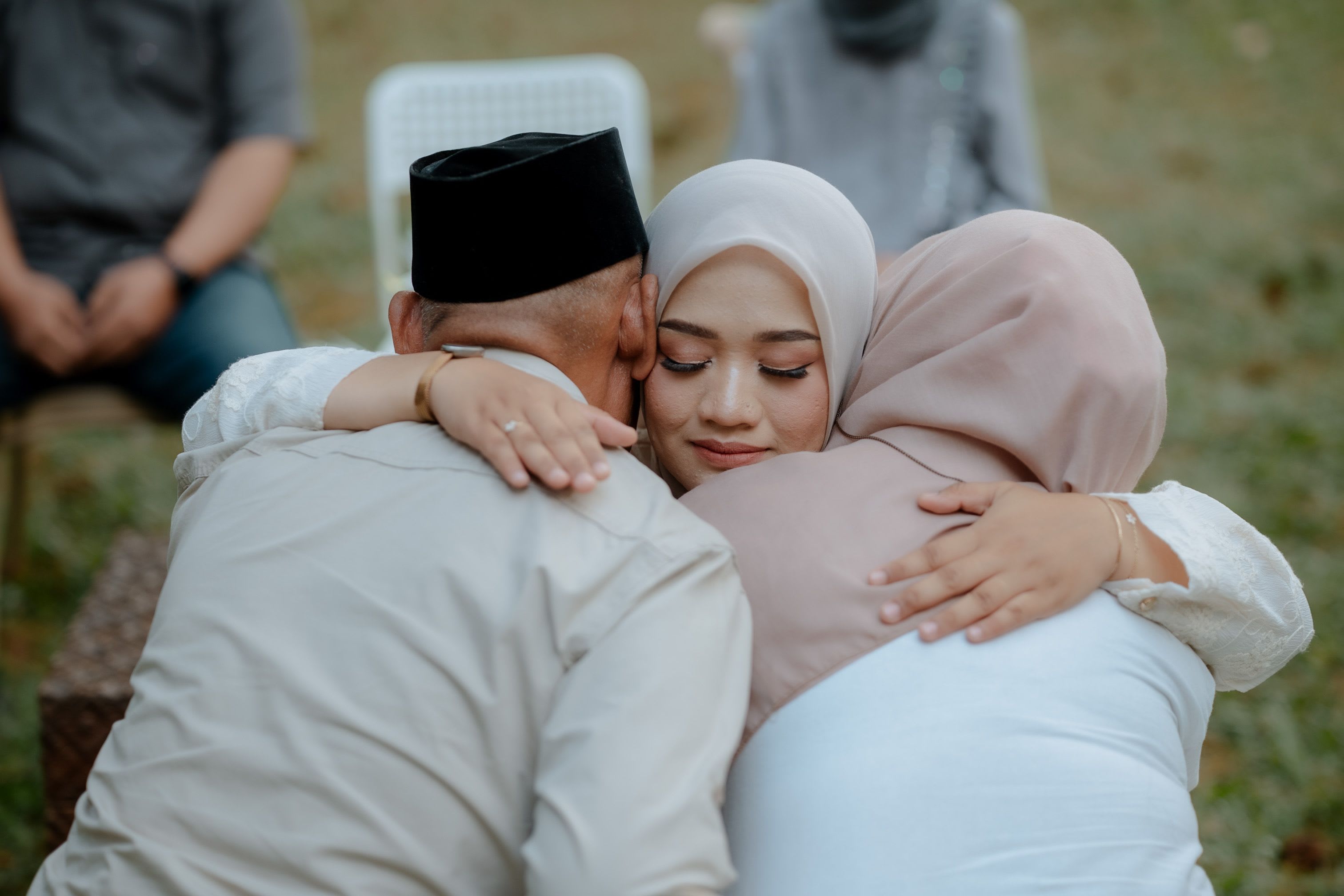

In Islamic law, the majority scholarly position requires a wali — a male guardian, typically the father — for a woman's marriage to be valid. However, if a wali unreasonably refuses or is absent, most scholars agree a judge or Islamic authority can act in his place. A small number of scholars, including within the Hanafi school, hold that an adult woman of sound mind may contract her own marriage. The answer depends on which scholarly opinion applies in your situation — and consulting a trusted imam matters here.
What is a wali and why does Islam require one?
A wali is a woman's marriage guardian — in most cases her father, then her paternal grandfather, then her brothers, in order of precedence. The requirement for a wali is based on the hadith of the Prophet ﷺ: "There is no marriage except with a wali." (Abu Dawud, authenticated by Al-Albani)
The wali is not a gatekeeper with unlimited power over a woman's marriage. His role is to act in her best interest — to provide accountability, protection, and the weight of family involvement in one of the most significant decisions of her life. The wali cannot force her to marry someone she does not want, and he cannot prevent her from marrying someone suitable without valid reason.
("The classical jurists were unanimous that a wali who prevents a woman from marrying a suitable man for no valid reason is an 'adl — unjustly withholding — and in this case the right of wilayah passes to the next male relative in line, and ultimately to a judge or Islamic authority. The wali's role is protective, not controlling. Al-Nawawi makes this explicit in Rawdat al-Talibin: the wali who acts against her interests has forfeited the function wilayah was designed to serve.")
Do all Islamic scholars agree a wali is required?
No — and this is one of the genuine points of scholarly disagreement in Islamic jurisprudence.
The Maliki, Shafi'i, and Hanbali schools hold that a wali is a condition of a valid marriage — without one, the nikah is not valid. The Hanafi school holds a different position: an adult Muslim woman of sound mind and legal majority may contract her own marriage, though the wali's involvement is strongly recommended and socially expected.
This is not a fringe position. The Hanafi madhab is the most widely followed school of Islamic jurisprudence globally, and its position on this question is well-established and classically documented.
("Abu Hanifah's position — that an adult woman may contract her own nikah — is based on the Quranic verse in Surah Al-Baqarah 2:232, which addresses those who prevent women from marrying, implying women have agency in the matter. Imam Abu Hanifah reasoned that a woman with full legal capacity in financial transactions has the same capacity in marriage. This reasoning is documented in Al-Kasani's Bada'i al-Sana'i, one of the foundational texts of Hanafi fiqh.")
If you are navigating this question practically, the madhab you follow — or the madhab followed by an Islamic court with jurisdiction — matters significantly.
What happens if a woman's wali refuses her marriage?
If a wali refuses to approve a marriage without valid Islamic reason, his guardianship can be transferred. The classical sequence is: the right passes to the next qualified male relative in line. If no suitable relative is available or willing, it passes to an Islamic judge, an imam, or an Islamic authority recognised in your context.
This is not a loophole or a modern accommodation. It is classical Islamic fiqh, documented across all major schools. The Prophet ﷺ himself said: "The sultan [Islamic authority] is the wali of the one who has no wali." (Abu Dawud, Tirmidhi)
Valid reasons a wali may decline include: the proposed husband has poor character or deen, the marriage would cause genuine harm, or the man cannot meet his financial obligations. Invalid reasons include: tribal or ethnic prejudice, financial considerations unrelated to the husband's ability to provide, or personal preference without Islamic basis.
If you are in a situation where your wali is refusing unreasonably, speaking with a trusted imam or Islamic scholar who can mediate — or who can serve in the wali capacity — is the established Islamic path forward.
Can a Muslim woman propose marriage herself?
Yes — and there is direct evidence for this in Islamic history.
Khadijah (RA), the first wife of the Prophet ﷺ, initiated the proposal of marriage to him. She sent an intermediary to convey her interest, and the marriage proceeded through the appropriate process with her wali involved. Her initiation did not make the marriage less valid or less honoured — she is described by the Prophet ﷺ with open tenderness decades after her death.
A Muslim woman expressing genuine interest in a man, initiating a conversation about marriage through appropriate channels, or asking someone to facilitate an introduction is entirely within Islamic norms. What is required is that the formal nikah process — including wali involvement in the majority scholarly view — is followed once both parties are serious.
What are a Muslim woman's rights in the marriage process?
Islamic law is explicit about several non-negotiable rights a woman holds in the marriage process.
The right to consent. A marriage contracted without a woman's genuine, free consent is invalid across all major schools of Islamic jurisprudence. The Prophet ﷺ said: "A previously married woman cannot be married without her instruction, and a virgin cannot be married without her permission." (Bukhari and Muslim) He also voided a marriage a woman brought to him that her father had contracted without her consent.
The right to reject a proposal. A woman has the unconditional right to say no to any proposal — including one her family favours — without that refusal requiring extensive justification. The wali may advise and may have input, but the final decision belongs to her.
The right to mahr. Every Muslim woman has the right to a mahr — a gift from her husband, belonging exclusively to her — as a condition of the nikah. It cannot be waived on her behalf by her family.
The right to see and speak with the potential spouse. The Prophet ﷺ encouraged men to look at the woman they intend to marry. Scholars extend this mutually — a woman has the right to meet and speak with a potential husband in an appropriate setting before making her decision.
("A 2023 survey by the Institute for Social Policy and Understanding found that 34% of Muslim women in America reported experiencing some form of family pressure that compromised their genuine consent in the marriage process — ranging from subtle social pressure to outright coercion. Islamic scholars across all schools are unambiguous: a marriage without genuine free consent is not a valid Islamic marriage, regardless of what family or community pressure accompanied it.")
What if there is no wali available?
If a woman has no living male relatives who can serve as wali — due to death, estrangement, or non-Muslim status — Islamic scholars provide clear guidance.
An imam or Islamic authority can serve as wali. Many mosques and Islamic centers in America have imams who regularly perform this function for women who have no available wali. This is not an unusual or exceptional situation — it is a well-established role within Islamic institutions.
If you are in this situation, contacting your local mosque or Islamic center and explaining your circumstances is the practical starting point. Soul Deeds also provides access to imams and Islamic advisors through in-app booking who can offer guidance specific to your situation.
How does this apply to Muslim women born or raised in the West?
Muslim women in Western countries navigate a specific complexity: they may be operating between Islamic law, the civil law of their country, and family cultural expectations that do not always align with any of the above.
Civil marriage law in the United States, United Kingdom, Canada, and most Western countries does not require a wali — a woman may legally marry with only her own consent and that of her husband. However, a civil marriage is not the same as an Islamic nikah. Most practicing Muslims seek both — a civil marriage that is legally recognised and a nikah that fulfils their Islamic obligations.
For the nikah specifically, the scholarly positions above apply. The key practical guidance: find a knowledgeable imam who understands both Islamic fiqh and the Western context you are operating in. The combination of civil and Islamic legal literacy matters here in a way it does not in countries where Islamic family law is state law.
Frequently Asked Questions
Is a nikah valid without a wali? It depends on the madhab. In the Maliki, Shafi'i, and Hanbali schools, a wali is required for the nikah to be valid. In the Hanafi school, an adult Muslim woman of sound mind may contract her own nikah, though wali involvement is strongly recommended. Consult a scholar familiar with your madhab and situation.
Can an imam act as wali if my father is not Muslim? Yes. If a woman's father or male relatives are non-Muslim, they cannot serve as wali for an Islamic marriage. In this case, an imam or Islamic authority serves in that role. This is a well-established provision across all major schools of Islamic jurisprudence.
Is Soul Deeds a dating app? No. Soul Deeds is a Muslim matrimonial platform for people seriously seeking marriage. Members are verified, and connections form through shared community service projects rather than swiping.
Can I speak with an imam through Soul Deeds about my specific situation? Yes. Soul Deeds includes in-app booking with advisors — imams, scholars, and marriage and relationship coaches — who can provide guidance on questions like wali, consent, and the marriage process.
Is Soul Deeds free? Yes — Soul Deeds is free to join, on iOS, Android, and the web.