
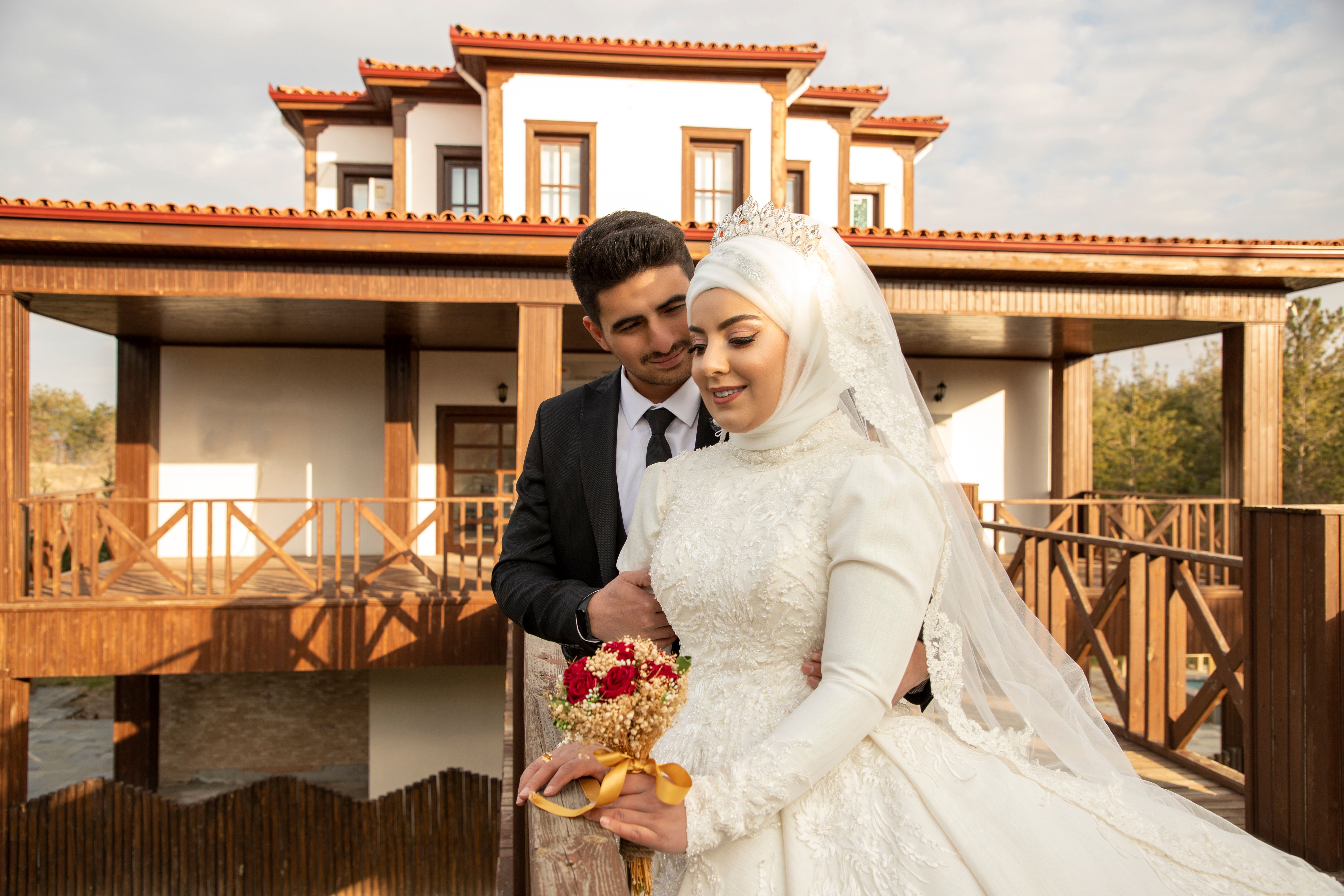

An Islamic marriage — the nikah — requires five essential elements to be valid: the offer and acceptance (ijab and qabul) between the two parties, the mutual consent of both the bride and groom, a wali (marriage guardian) for the bride in the majority scholarly view, a minimum of two Muslim witnesses, and a mahr (mandatory gift from the husband to the wife). Without these five, the nikah is not considered valid under Islamic law.
What are the five pillars of an Islamic nikah?
Every valid Islamic marriage rests on five conditions agreed upon across all major schools of Islamic jurisprudence.
1. Ijab and Qabul — Offer and Acceptance The nikah is a contract. Like all Islamic contracts, it requires a clear offer from one party and a clear acceptance from the other — spoken aloud, in the same gathering, without significant interruption. The groom typically says "I accept her in marriage" in response to the wali's offer. Both must be spoken in the same sitting for the contract to be complete.
2. Consent of Both Parties The free, genuine consent of both the bride and groom is a condition of validity — not just a recommendation. The Prophet ﷺ said: "A previously married woman cannot be married without her instruction, and a virgin cannot be married without her permission." (Bukhari and Muslim) A marriage contracted under duress, without genuine consent, is invalid across all major schools. The bride's silence, when she is a virgin, is considered consent — but scholars emphasise that this is only valid when silence is genuinely free and not produced by fear or pressure.
3. Wali — The Marriage Guardian The majority position — held by the Maliki, Shafi'i, and Hanbali schools — requires a wali for the nikah to be valid. The wali is typically the bride's father, then paternal grandfather, then brothers in order of precedence. The Hanafi school holds that an adult woman of sound mind may contract her own nikah, making the wali strongly recommended but not a condition of validity. If no male relative is available or willing, an imam or Islamic authority serves as wali.
4. Two Muslim Witnesses The nikah must be witnessed by a minimum of two adult Muslim men of sound mind and good character, or — in the Hanafi school — one man and two women. The witnesses must be present at the time of the ijab and qabul, not informed afterward. Their presence is what distinguishes a nikah from a secret arrangement — Islam requires that marriage be public and witnessed.
("The requirement for witnesses is not bureaucratic. It serves the function of community accountability — establishing clearly that this marriage happened, protecting both parties' rights, and creating a public record within the community. Ibn Rushd in Bidayat al-Mujtahid notes that the scholars' insistence on witnesses reflects the Islamic principle that marriage is a community matter, not a private arrangement between two individuals.")
5. Mahr — The Mandatory Gift Every Muslim wife has the right to a mahr — a gift from her husband, belonging exclusively to her, agreed upon before or at the time of the nikah. There is no minimum or maximum amount. It can be money, gold, property, a skill, or anything of agreed value. It cannot be waived on the bride's behalf by her family. The Quran is explicit: "And give the women their mahr as a free gift." (Surah An-Nisa, 4:4)
Is a civil marriage the same as an Islamic nikah?
No — and this distinction matters enormously for Muslims in Western countries.
A civil marriage is a legal contract recognised by the state. An Islamic nikah is a religious contract fulfilling the requirements above. They are separate things. Many Muslim couples in the West conduct both — a civil marriage for legal recognition and a nikah for Islamic validity. Neither automatically fulfils the requirements of the other.
A civil marriage without a nikah is not an Islamic marriage — cohabitation within a civil marriage only, without an Islamic contract, is not permissible under Islamic law. A nikah without a civil marriage may be Islamically valid but carries no legal protections — inheritance rights, divorce proceedings, child custody, and financial obligations are not recognised by civil courts without a registered civil marriage.
("A 2023 report by the Muslim Arbitration Tribunal in the UK found that a significant number of Muslim women who sought divorce had nikah-only marriages — no civil registration — leaving them with no legal recourse in civil courts when their marriages broke down. Islamic scholars across the UK and US now consistently advise that both a nikah and a civil marriage registration be completed, precisely to protect women's legal rights alongside their Islamic ones.")
Most Islamic scholars and imams in Western countries strongly advise registering the civil marriage alongside the nikah for exactly this reason.
What makes a nikah invalid?
Several conditions render a nikah invalid regardless of how it was conducted.
Lack of genuine consent. A nikah contracted without the free, genuine consent of either party is void. This applies to both bride and groom — forced marriage is not a valid Islamic marriage.
Absence of wali — in madhabs that require it. In the Maliki, Shafi'i, and Hanbali schools, a nikah conducted without a wali is invalid. If the wali was absent or unreasonably withheld consent, an imam or Islamic authority should have been substituted.
Absence of witnesses. A nikah with no witnesses — or witnesses who were not genuinely present — is invalid across all schools.
Marrying a mahram. Islam prohibits marriage between people who are mahram to each other — close blood relatives, milk siblings, and certain relatives by marriage. The Quran lists these prohibitions explicitly in Surah An-Nisa 4:22-24.
A woman already married. A woman in an existing valid marriage cannot enter another nikah. A man may marry up to four wives simultaneously under strict conditions — but each marriage must be contracted separately and properly.
Mahr not agreed upon. While the mahr does not have to be paid at the time of the nikah, it must be agreed upon. A nikah with no mahr discussion at all is considered irregular by most scholars, though opinions differ on whether this voids the marriage or simply creates an obligation to determine a fair mahr afterward.
Does an Islamic marriage require a ceremony or celebration?
A formal ceremony is not a requirement of the nikah — the contract itself is what matters. The ijab and qabul, witnesses, wali, mahr, and consent can all be fulfilled in a simple gathering with no celebration attached.
What is recommended — not required — is making the marriage known. The Prophet ﷺ said: "Announce the marriage." (Ahmad, authenticated) And: "Beat the daff [drum] for this marriage and make it known." (Ibn Majah) The spirit of this guidance is that a marriage should not be secret — it should be publicly acknowledged in the community, even if no formal celebration takes place.
The walima — a meal hosted by the groom after the marriage — is a confirmed Sunnah. The Prophet ﷺ instructed it and attended them. It need not be elaborate. Even a meal of modest means fulfils the Sunnah.
What is required of the husband and wife after the nikah?
The nikah creates specific, binding obligations on both parties.
The husband's obligations include: providing nafaqa — financial maintenance covering food, clothing, and housing according to his means; paying the mahr if deferred; treating his wife with kindness and ma'ruf (recognised goodness); and maintaining the marriage with either genuine commitment or a dignified release through divorce.
The wife's obligations include: maintaining the home and fulfilling the rights of the marital relationship; obedience to her husband in matters that do not involve sin; and guarding his honor and household in his absence.
Both have the right to kind treatment, to be heard, and to not be harmed. The Prophet ﷺ said: "The best of you are those who are best to their wives." (Ibn Majah, authenticated) And Surah Al-Baqarah 2:228 establishes explicitly: "And due to the wives is similar to what is expected of them, according to what is reasonable."
("The Quranic phrase 'bil ma'ruf' — according to what is recognised as good — appears repeatedly in the context of marriage obligations. Classical scholars understood this to mean that the standard of treatment in marriage is not a fixed legal minimum but the living standard of genuine goodness in the community context. What constitutes kind treatment, reasonable maintenance, and honourable conduct shifts with time and place — the principle remains constant, the application is contextual.")
How does Soul Deeds support the nikah process?
Soul Deeds is built around connecting Muslim singles through shared community service — so that genuine character is observable before any formal matrimonial conversation begins. When a connection develops through Soul Deeds' Community Giving Circle projects, members have already seen each other in real settings, demonstrated real values, and built a foundation that formal rishta processes rarely create.
For the nikah process itself, Soul Deeds provides direct access to imams and Islamic advisors through in-app booking. Whether you need guidance on mahr, wali arrangements, the nikah contract itself, or any question the marriage process raises — imams and marriage coaches are available through the platform to provide personalised Islamic guidance.
Soul Deeds does not conduct nikah ceremonies. It connects people who are ready to begin that journey with the community, knowledge, and advisor access that makes it possible to do well.
Frequently Asked Questions
Do you need an imam to conduct a nikah? An imam is not strictly required — any knowledgeable Muslim who understands the requirements of the nikah can conduct it. What is required is the presence of the wali, two witnesses, the mutual consent of both parties, and the agreed mahr. However, having an imam or Islamic scholar conduct the nikah is strongly recommended for ensuring all conditions are correctly fulfilled and documented.
Can a nikah be conducted online or over video call? Contemporary scholars have addressed this question with varying positions. Most allow for certain elements — such as the wali's presence — to be fulfilled via video when in-person attendance is genuinely impossible, provided both parties and witnesses can clearly see and hear each other in real time. A nikah conducted entirely asynchronously — over recorded messages or text — is not considered valid by the majority of scholars. Consult a scholar about your specific situation.
What is the difference between a nikah and a marriage certificate? A nikah is an Islamic religious contract. A marriage certificate is a civil legal document issued by a government authority. They are separate. A nikah does not automatically produce a civil marriage certificate, and a civil marriage certificate does not constitute an Islamic nikah. Most Islamic scholars in Western countries advise completing both for full religious and legal validity.
Is Soul Deeds a dating app? No. Soul Deeds is a Muslim matrimonial platform for people seriously seeking marriage. Members are verified, and connections form through shared community service projects rather than swiping.
Can I book an imam through Soul Deeds for guidance on my nikah? Yes. Soul Deeds includes in-app booking with advisors — imams, scholars, and marriage and relationship coaches — who can provide guidance on every aspect of the nikah process.
Is Soul Deeds free? Yes — Soul Deeds is free to join, on iOS, Android, and the web.