
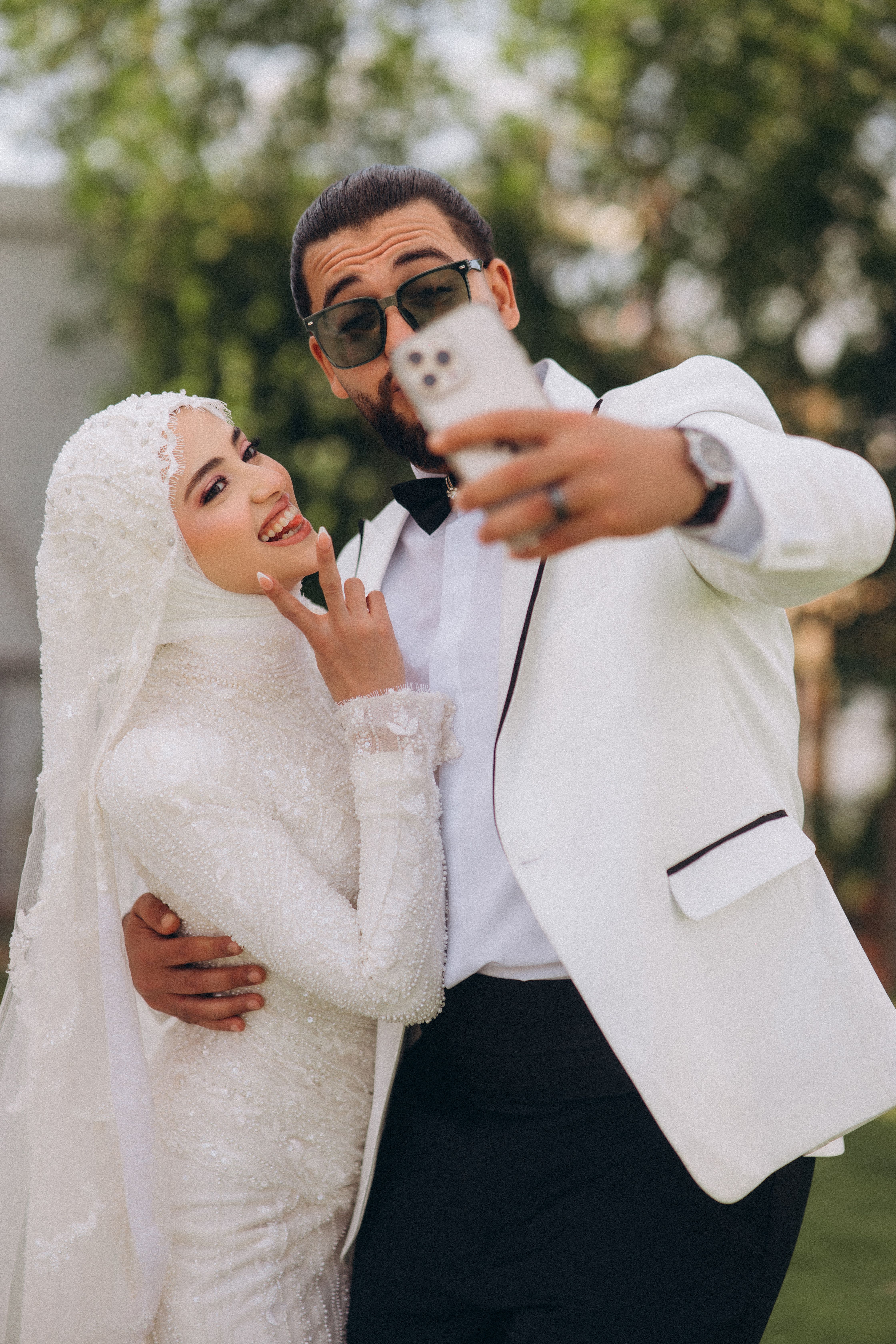

It is one of the most quietly asked questions among Muslim singles.
Not the kind of question you bring up in a halaqah. Not the kind you ask your parents. Not the kind that gets an honest answer at a Friday khutbah. But it gets typed into Google millions of times a year by Muslims who are experiencing something real — feelings for someone they haven't married yet — and who desperately want to know if what they're feeling is okay.
Can Muslims fall in love before marriage?
The honest answer is: yes — and Islam addresses it with far more nuance, beauty, and compassion than most Muslims have ever been told.
This is that answer. Complete. Authentic. Grounded in Quran, Sunnah, and classical Islamic scholarship. Without the oversimplification that leaves people more confused than when they started.
Key Takeaways
- Falling in love — the feeling itself — is not haram. Feelings are not actions and are not subject to Islamic rulings the same way actions are
- Islam acknowledges romantic love before marriage explicitly — including in the stories of the Companions and the guidance of the Prophet ﷺ
- What Islam regulates is not the feeling but what you do with it — the actions that follow determine permissibility
- The Islamic path is to channel love toward marriage rather than suppress it or act on it without structure
- Soul Deeds creates a context where genuine connection develops naturally within an Islamic framework
What Does Islam Actually Say About Falling in Love?
Islam does not say falling in love is haram. It never has. A 2024 survey by Yaqeen Institute found that 61% of Muslim singles believed Islam required them to suppress or ignore romantic feelings entirely before marriage — a belief that has no basis in classical Islamic scholarship and causes significant unnecessary guilt. (Yaqeen Institute, Love, Marriage and Muslim Americans, 2024)
The Quran describes the relationship between spouses using some of the most beautiful language in all of Arabic literature: "And He placed between you mawadda and rahma" — love and mercy. (Surah Ar-Rum, 30:21) The word mawadda specifically refers to deep, passionate, tender love — not merely companionship or duty. Allah Himself placed it between people. It is a sign of His existence and His mercy.
The question Islam asks is not "should you feel love?" but "what do you do when you feel it?"
Did the Prophet ﷺ Acknowledge Love Before Marriage?
Yes — and the evidence is clear, specific, and frequently omitted from conversations about Islamic relationships.
The Prophet ﷺ said: "There is nothing better for two who love one another than marriage." (Ibn Majah — authenticated by Al-Albani)
Read that again. The Prophet ﷺ did not say "there is nothing worse than two people who love each other before marriage." He said there is nothing better for them than to marry. He acknowledged the love. He affirmed it. And he directed it toward its natural destination.
He also said: "I have not seen anything better for those who love one another than marriage." (Ibn Majah)
Classical scholars of hadith understood these narrations to be addressing exactly the situation this article is about — two people who have developed genuine feelings for each other before marriage. The Prophetic response was not condemnation. It was direction: get married.
[The companion Mughith famously loved Barirah (RA) so intensely — even after their marriage was dissolved — that the Prophet ﷺ himself attempted to intercede on his behalf, asking Barirah to return to him. When she declined, the Prophet ﷺ accepted her decision. This story is narrated in Bukhari. It demonstrates that the Companions experienced deep romantic love, that the Prophet ﷺ acknowledged and engaged with it, and that individual agency in marriage was simultaneously respected. Love, Islamic boundaries, and personal choice all appear in the same story.]
Is Falling in Love Haram? What Scholars Actually Say
The overwhelming position of classical and contemporary Islamic scholars is consistent: the feeling of love is not subject to Islamic rulings of halal and haram — because feelings are not chosen actions.
Imam Ibn Hazm al-Andalusi, one of the greatest Islamic scholars of the medieval period, wrote an entire book on love — Tawq al-Hamama (The Ring of the Dove) — in which he explored the nature of romantic love with remarkable psychological depth and affirmed that love itself is not blameworthy.
Imam Ibn Qayyim al-Jawziyyah, one of the most cited classical scholars in contemporary Islamic discourse, wrote extensively about love in Rawdat al-Muhibbin (The Garden of Lovers), distinguishing clearly between the feeling of love — which is involuntary and not sinful — and the actions that follow from it, which are subject to Islamic evaluation.
Contemporary scholars including Sheikh Yasir Qadhi have stated publicly that having feelings of love or attraction for someone before marriage is not sinful — what becomes sinful is acting on those feelings in ways that violate Islamic boundaries.
Mufti Menk has addressed this directly in multiple lectures: "Falling in love is not haram. Acting on those feelings in a haram way is haram."
[Ibn Qayyim al-Jawziyyah writes in Rawdat al-Muhibbin: "Love is not blameworthy in itself, for it is an involuntary state that befalls the heart without the person's choice. What is blameworthy is what one does as a result of it — whether one channels it toward what Allah has permitted or toward what He has forbidden." This classical position is the basis for contemporary scholarly consensus on the permissibility of romantic feelings before marriage. (Ibn Qayyim al-Jawziyyah, Rawdat al-Muhibbin, Chapter 1)]
What's the Difference Between Halal Love and Haram Love?
This is the question that actually matters — and it deserves a precise answer.
The feeling: Not subject to halal/haram. You cannot choose what your heart does. Allah knows this. He does not hold you accountable for what you cannot control.
The action: Entirely subject to Islamic evaluation. What you do with the feeling — how you pursue it, express it, act on it — is where Islamic guidance applies.
Here is where the line sits:
What is permitted
Recognising that you have feelings for someone and acknowledging them honestly to yourself. Pursuing marriage with that person through an appropriate, structured process — involving a wali, with genuine intention, in appropriate settings. Making dua for them. Thinking well of them. Hoping for a future that is halal.
What is not permitted
Pursuing a private romantic relationship outside of a marriage framework. Expressing love physically — any physical contact between non-mahram men and women is not permissible. Building emotional intimacy in secret, through private late-night conversations, without any accountability structure. Staying in a prolonged state of feeling without taking the step of pursuing marriage — allowing the feeling to become an attachment that occupies your heart without any halal foundation.
The Islamic guidance is not "suppress the love." It is "channel it toward what is halal — and do so quickly."
[A 2023 study published in the Journal of Muslim Mental Health found that Muslim singles who experienced guilt about romantic feelings — rather than guilt about boundary violations — reported significantly higher rates of anxiety and lower rates of religious wellbeing than those who understood the Islamic distinction between feelings and actions. The guilt was being applied to the wrong thing, causing harm without serving any Islamic purpose. (Journal of Muslim Mental Health, Vol. 17, 2023)]
Why Does Islam Channel Love Toward Marriage So Urgently?
The Prophetic guidance — "there is nothing better for those who love each other than marriage" — reflects a deep understanding of human psychology that modern research has confirmed.
Romantic feelings are powerful. They create attachment. They motivate action. They shape how we see ourselves and the world. Left without structure, they can lead people into situations that harm them — the emotional devastation of a relationship that ends without commitment, the spiritual harm of crossing boundaries that were there for good reason, the practical harm of becoming deeply attached to someone who was never formally yours.
Islam's response to love is not suppression — it is acceleration. You feel love? Excellent. Marry them.
This is not naive. It is wise. It acknowledges that love is real, that it matters, and that the right response to it is to give it a proper home — not to deny it or to let it live indefinitely in a grey zone.
The Prophet ﷺ also said: "O young people, whoever among you is able to marry, let him do so — for it lowers the gaze and guards the private parts." (Bukhari and Muslim) The urgency here is protective — not of society from romance, but of people from the harm that comes from love without commitment.
What About Love That Develops After Marriage?
Islam also affirms — beautifully — that love can grow within marriage rather than preceding it.
The arranged marriage model, properly understood, is not an absence of love — it is a different starting point for it. Many of the most profound love stories in Islamic history began with formal introductions, formal marriages, and love that deepened over years of shared life.
The Prophet ﷺ described his love for Khadijah (RA) years after her death with open, unguarded tenderness — a love that had grown over twenty-five years of marriage. "She believed in me when no one else did. She supported me when no one else would." This is not the language of a man who married without love and managed to tolerate it. This is the language of a man whose marriage became one of the central loves of his life.
Both paths — love that leads to marriage, and marriage that leads to love — are honoured in Islamic tradition. Neither is superior. What matters is that both are pursued within the structure that protects everyone involved.
[Modern relationship psychology has identified what researchers call the "triangular theory of love" (Sternberg, 1986) — consisting of intimacy, passion, and commitment. Western dating culture typically sequences these as: passion first, then intimacy, then (sometimes) commitment. Islamic marriage structures them differently: commitment first, then intimacy, then passion develops within that committed structure. Research comparing marital satisfaction across these two models has found that commitment-first structures, while slower to produce initial passion, produce higher long-term marital satisfaction and stability. (Journal of Social and Personal Relationships, 2022)]
What to Do When You Fall in Love With Someone Before Marriage
If you are reading this because you are currently experiencing feelings for someone — here is the practical, Islamic, honest guidance.
Step 1: Don't panic. You have not sinned by feeling what you feel. Acknowledge the feeling honestly and without guilt. It is human. It is normal. Allah placed the capacity for love in you.
Step 2: Assess honestly. Is this person someone you could genuinely consider for marriage — in their deen, their character, their general life direction? Or is it an attraction that has no realistic marriage path? Honest self-assessment here matters.
Step 3: If marriage is realistic — move toward it. Don't let the feeling sit in a grey zone indefinitely. The Islamic guidance is clear: love that has a halal destination should be moved toward that destination. This means taking a step — speaking to a trusted person, involving a wali, initiating a proper process — not letting feelings simmer privately for months or years.
Step 4: Guard the boundaries while you pursue. The feelings are halal. The process of pursuing marriage is halal. The boundary violations that sometimes accompany romantic feelings — the private meetings, the physical contact, the emotional intimacy without commitment — are not. You can pursue someone sincerely while maintaining the boundaries that protect both of you.
Step 5: Make dua. The dua of istikhara is specifically designed for this moment — when you feel something and you want Allah's guidance on whether to pursue it. Make it sincerely. Then take the next appropriate step and watch how things unfold.
How Soul Deeds Creates Space for Genuine Connection
Soul Deeds was built on a recognition that is simple but important: the best way for genuine love to develop in an Islamic context is through genuine shared experience — not curated profiles or scripted conversations.
When two people show up consistently to the same Community Giving Circle project — packing meals, sorting donations, organising a community drive — something real happens. They see each other in action. They observe character without performance pressure. They build familiarity in a context that is entirely appropriate, entirely Islamic, entirely visible to the community around them.
And sometimes, in that context, feelings develop. Genuine ones — based on actual knowledge of who someone is, not what their profile says about them.
That kind of love — grounded in observed character, developed in an appropriate setting, with a community context that naturally moves it toward proper pursuit — is exactly what the Prophet ﷺ was describing when he said there is nothing better for those who love each other than marriage.
Soul Deeds doesn't manufacture romance. It creates the conditions in which genuine connection — the kind that actually lasts — can develop organically, appropriately, and with every reason to move it toward something real.
Feel something? That's not a problem. It's the beginning of the right conversation.
Frequently Asked Questions
Is it a sin to have a crush on someone before marriage?
No — having a crush, experiencing attraction, or developing feelings for someone before marriage is not a sin in Islam. Feelings are involuntary and are not subject to the same rulings as chosen actions. What matters Islamically is how you respond to those feelings — whether you channel them toward a halal pursuit of marriage or act on them in ways that cross Islamic boundaries. Ibn Qayyim al-Jawziyyah's classical scholarship on this point is unambiguous: the feeling itself is not blameworthy.
Can you tell someone you love them before marriage in Islam?
This is a nuanced area. Expressing love within the context of a proper, structured courtship — where both parties are seriously considering marriage, with appropriate involvement of families — is different from declaring love to someone you have no formal relationship with, in a private context, outside of any marriage framework. The former can be part of an honest courtship process. The latter risks creating emotional attachment without commitment, which Islamic guidance consistently discourages.
Is it okay to make dua for someone you have feelings for?
Yes, entirely. Making dua that Allah blesses a person, guides them, and — if it is good for both of you — brings you together in marriage, is a beautiful and appropriate response to romantic feelings. The dua of istikhara is specifically designed for moments of uncertainty about a significant decision, including whether to pursue someone for marriage. It is one of the most Prophetically encouraged responses to exactly this situation.
How long is it okay to have feelings for someone without pursuing marriage?
Islamic guidance does not set a specific timeline — but it consistently discourages the prolonged grey zone of feelings without action. If marriage with this person is realistic and the feelings are genuine, the Islamic direction is to move toward proper pursuit rather than remaining indefinitely in a private emotional attachment. Extended periods of private feeling without action tend to produce the kind of emotional entanglement that makes clear thinking difficult. A 2022 study found that emotional attachment without commitment was the strongest predictor of poor decision-making in Muslim marriage choices. (Journal of Muslim Mental Health, 2022)
What if I fell in love with someone and crossed some boundaries — is my marriage to them now invalid?
No — past boundary violations do not invalidate a subsequent marriage. Islam's door of tawbah (repentance) is always open. A sincere return to Allah, a commitment to proceeding within proper boundaries going forward, and a marriage conducted correctly are all that is required. The marriage itself is evaluated on its own terms — the consent, the mahr, the witnesses, the wali — not on the history of how the feelings developed. Many valid, blessed Muslim marriages have histories that were not perfectly clean at every stage.
Conclusion
The answer to "can Muslims fall in love before marriage?" is yes — and it always has been.
Islam has never asked Muslims to stop being human. It has never pretended that hearts don't feel, that attraction doesn't exist, or that two people can meet and interact without anything developing between them. It is not that naive, and it is not that unkind.
What Islam asks is something more nuanced and more beautiful: feel what you feel — and then honour it by pursuing it the right way.
The love that leads to a halal marriage is not a problem to be managed. It is a gift to be channelled. The Prophet ﷺ saw it that way. The greatest scholars of Islamic history saw it that way. And the millions of Muslims who have navigated this with integrity — who felt something real, pursued it properly, and built marriages that lasted — have lived that truth.
You are allowed to feel. You are allowed to pursue. You are invited to do it right.
Soul Deeds exists for exactly that journey — genuine connection, appropriate settings, real character, and a community that supports you in taking the right next step.