
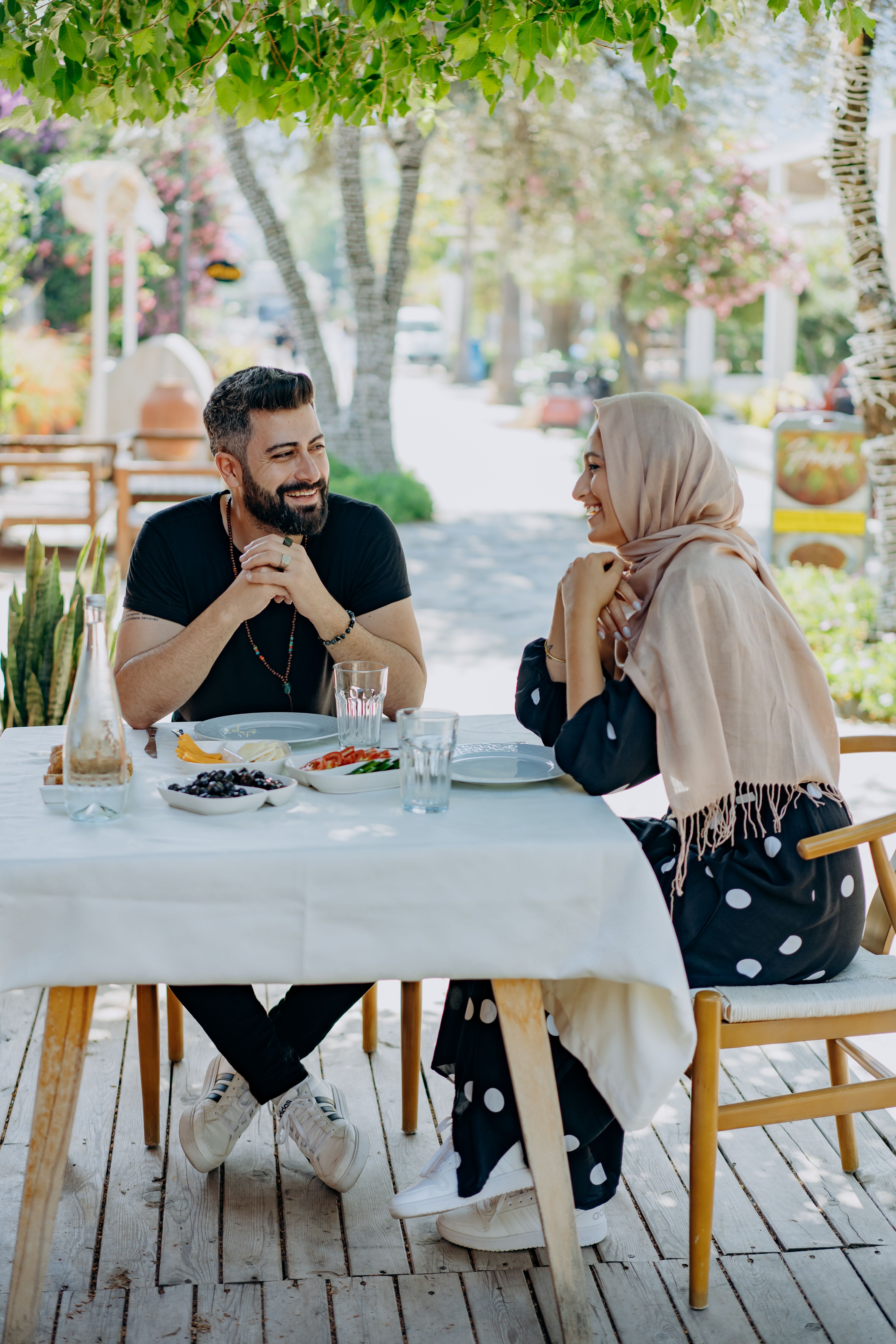

Every year, millions of Muslim singles type the same question into Google: Is dating haram?
It is one of the most searched Islamic questions online — and one of the most poorly answered. The responses range from a blunt "yes, absolutely" with no nuance to a permissive "it depends" with no real guidance. Neither actually helps the Muslim single trying to navigate real life in 2026.
So here is the honest, complete, Quran-and-Sunnah-based answer — with no oversimplification, no lecture, and no pretending the question is simpler than it is.
Key Takeaways
- Islam does not use the word "dating" — it addresses the underlying actions and intentions, which are what determine permissibility
- Casual dating with no intention of marriage is not permitted in Islam — the consensus among scholars is clear on this
- Purposeful, structured courtship with the intention of marriage, within appropriate boundaries, is not only permitted but encouraged
- The boundary between halal courtship and haram dating is defined by intention, structure, and the presence or absence of appropriate boundaries
- Soul Deeds offers a model for purposeful connection that is fully aligned with Islamic values
What Does Islam Actually Say About Dating?
Islam doesn't use the word "dating" because the concept didn't exist in 7th century Arabia — but it addresses everything the word covers. The Quran and Sunnah are specific about relationships between unmarried men and women: private meetings, physical contact, emotional entanglement without commitment, and relationships pursued for pleasure rather than marriage are all clearly discouraged or prohibited.
The Quran says: "And do not approach unlawful sexual intercourse. Indeed, it is ever an immorality and is evil as a way." (Surah Al-Isra, 17:32)
The key word here is "approach" — not just the act itself, but anything that leads toward it. Islamic ethics operates on the principle of sadd al-dhara'i — closing the pathways to harm. Casual dating, in the Western sense, is considered one of those pathways.
Is ALL Dating Haram — Or Just Certain Types?
This is where the nuance matters, and where most answers fail Muslims who are genuinely trying to understand.
Casual dating — haram. A relationship pursued for companionship, romance, or physical enjoyment without any intention of marriage is not permissible in Islam. This is the consensus position across all major Islamic schools of thought — Hanafi, Maliki, Shafi'i, and Hanbali.
Purposeful courtship — permitted and encouraged. Getting to know someone with the genuine intention of evaluating them for marriage, within appropriate boundaries, with family awareness and involvement, is not only allowed but is exactly what Islam recommends.
The distinction is not about feelings. It's about intention and structure.
[The Arabic concept that best maps to Islamic courtship is ta'aruf — literally "getting to know." It implies purposeful, bounded interaction aimed at determining compatibility for marriage. This is categorically different from dating in the casual Western sense, and Islamic scholars have consistently affirmed its permissibility when conducted appropriately.]
The Prophet ﷺ said: "A man must not be alone with a woman, and a woman must not travel except with a mahram." (Bukhari and Muslim) This hadith defines the structural boundary — not that interaction is prohibited, but that it must have appropriate structure and not occur in private, unwitnessed settings.
What Makes Courtship Halal vs. Haram?
The line between permissible Islamic courtship and impermissible dating comes down to four factors:
1. Intention
Is the purpose marriage — genuinely, not theoretically? Or is the purpose companionship, romance, or physical connection without commitment? Islam is direct: relationships between unmarried men and women are only permitted when the goal is marriage.
2. Boundaries
Are the interactions happening in appropriate settings — not in private, not alone, not in ways that create physical or emotional intimacy beyond what is needed to make an informed decision about marriage? The Prophet ﷺ was explicit that a man and woman alone together are joined by a third — shaitan.
3. Family and community involvement
Islamic courtship is not a secret. It involves a wali (guardian) for the woman, family awareness, and community accountability. This structure protects both parties and keeps the process honest.
4. Progress toward a decision
Halal courtship moves toward a conclusion — a yes or a no — within a reasonable timeframe. An extended "getting to know you" arrangement with no movement toward commitment is not courtship. It is a situationship with Islamic vocabulary applied to it.
When all four of these are present, the interaction is courtship — and it is halal. When any of them are absent, it moves toward what scholars would consider impermissible.
What Do Islamic Scholars Say About Dating in 2026?
The scholarly consensus on casual dating has not changed — it remains impermissible. But contemporary scholars have increasingly addressed the realities of Muslim life in the West and the specific challenges facing diaspora Muslims.
Sheikh Yasir Qadhi has stated clearly that casual dating is haram but has also emphasised that structured, purposeful courtship — even through modern platforms — can be entirely halal when conducted with proper intention and boundaries.
Mufti Menk has addressed the question of matrimonial apps and online interaction, affirming their permissibility when used with genuine marriage intent and appropriate conduct, while emphasising that the process must remain transparent and family-involved.
Dr. Ingrid Mattson, former president of the Islamic Society of North America, has written about the need for Muslim communities to develop structured courtship models that work within modern Western contexts — acknowledging that the traditional community-based models have broken down for many diaspora Muslims.
The scholarly position across the spectrum is consistent: the goal is not to prevent Muslim singles from finding spouses — it is to ensure the path to marriage is structured, intentional, and protected from the harms that casual romantic relationships carry.
Why Did Allah Prohibit Casual Dating?
Understanding the why behind Islamic guidance on relationships helps it land differently than a simple rule.
Protection of the heart. Emotional attachment formed outside of commitment creates real harm — confusion, heartbreak, the loss of emotional energy that was given without a foundation of genuine security. Islam protects the heart by requiring that emotional intimacy develop within a committed, structured framework.
Protection of lineage and family structure. The Islamic family is the foundational unit of society in the Islamic worldview. Casual relationships, with their potential for physical consequences, threaten the clarity and stability of lineage — something Islam considers a fundamental human right to know and protect.
Protection of dignity. Both men and women are protected by Islamic relationship ethics from being used — from investing emotionally, physically, or spiritually in a relationship that carries no obligation of commitment from the other party.
Protection from spiritual harm. Relationships pursued outside of Islamic boundaries occupy the heart in ways that affect the person's relationship with Allah. The concept of ghaflah — heedlessness — is closely associated with following desires without structure or accountability.
The prohibitions are not arbitrary restrictions. They are a coherent system of protection for individuals, families, and communities.
Is Using a Matrimonial App Haram?
No — and this question deserves a direct answer because it confuses many Muslim singles.
Matrimonial apps are tools. Their permissibility depends entirely on how they are used. Using a matrimonial platform with genuine marriage intent, conducting interactions appropriately, involving family in the process, and moving toward a decision within a reasonable timeframe is entirely halal.
Using a matrimonial app to pursue casual romantic connection, to engage in private emotional intimacy without commitment, or to interact in ways that violate Islamic boundaries of modesty is not made halal by the fact that the platform calls itself "matrimonial."
[ The same action — messaging someone of the opposite gender — can be halal or haram depending entirely on intention, context, and conduct. Islamic ethics is not primarily a set of external prohibitions but a framework for aligning action with intention. A matrimonial app used with genuine intention and appropriate conduct is as halal as any other form of structured courtship.]
What Is the Halal Alternative to Dating?
The halal alternative to dating is not the absence of any process. It is a structured, intentional, boundaried courtship — one that takes compatibility seriously, involves family and community appropriately, and moves toward a genuine decision.
In practice, this looks like:
Clear intention from the start. Both parties know why they are interacting. There is no ambiguity about whether this is "just getting to know each other as friends" versus a genuine exploration of marriage compatibility.
Family or guardian involvement. The wali is aware and involved — not necessarily present at every interaction, but informed and part of the process.
Appropriate settings. Interactions happen in contexts where appropriate behaviour is naturally maintained — group settings, community events, video calls with family awareness, not private one-on-one environments designed for romantic intimacy.
A genuine evaluation process. Questions about values, deen, family expectations, lifestyle, and character are actually asked and answered. The process is substantive, not performative.
Movement toward a decision. Within a reasonable timeframe, both parties arrive at a yes or a no. Extended indefinite courtship without progress is not Islamic — it is a grey zone that carries most of the harms of casual dating without the honesty.
How Soul Deeds Makes Halal Courtship Natural
Soul Deeds was built on a simple recognition: the biggest challenge for Muslim singles isn't finding people — it's finding a setting where genuine, appropriate, character-revealing interaction is possible before the formal commitment of a rishta.
Community service projects — the foundation of Soul Deeds' Community Giving Circle model — solve this problem naturally.
When two people are working alongside each other at a shelter meal, or sorting donations for a community drive, or showing up consistently for a cause they both care about — they are interacting in a group setting, with shared purpose, in a way that reveals genuine character rather than curated self-presentation.
This is halal courtship in its most natural form. There is no private romantic interaction. There is no ambiguity about the setting. There is observable character — how someone treats the people they're serving, whether they show up when it's inconvenient, how they handle frustration and difficulty — that no matrimonial profile can replicate.
And when genuine connection develops in that context, it can be moved into a proper formal process — with family involvement, with clear intention, with the structure that makes it genuinely halal.
Soul Deeds doesn't replace the rishta process. It creates the conditions for a better one — one where both people already know something real about each other before the formal evaluation begins
Frequently Asked Questions
Is it haram to talk to someone you're interested in before marriage?
No — talking with someone you're considering for marriage is not haram. The conditions are: there should be genuine marriage intent, interactions should be appropriate and not overly intimate, family should be aware and involved, and the setting should be proper. Casual romantic conversation with no marriage intent or structure is what Islamic guidance discourages. Purposeful, boundaried communication aimed at evaluating compatibility is entirely permissible.
Is it haram to have feelings for someone before marriage?
No. Feelings are not actions — they are not subject to the same Islamic rulings as behaviour. What matters is how those feelings are acted upon. Developing feelings for someone and pursuing them through an appropriate, structured, halal courtship process is the intended path. Acting on feelings through casual dating, private romantic contact, or emotional intimacy without commitment is what creates the problem.
Can Muslim men and women be friends?
This is one of the most debated questions in contemporary Islamic ethics. The scholarly majority position is that casual friendship between unrelated men and women — particularly friendship involving regular private interaction and emotional closeness — is problematic due to the fitnah (temptation and harm) it can create. Interaction in appropriate settings, for genuine purposes, with proper conduct is a different matter. The distinction is between friendship as a social habit and interaction for a legitimate purpose.
Is online courtship through matrimonial apps halal?
Yes, when conducted with genuine marriage intent, appropriate conduct, family awareness, and within Islamic boundaries of modesty. The medium itself is not what determines permissibility — the intention and conduct are. A 2023 survey found that over 40% of Muslim marriages in Western countries now begin through online matrimonial platforms, with the majority of couples reporting family involvement in the process. (Islamic Society of North America, 2023)
What is the Islamic ruling on kissing or holding hands before marriage?
Any form of physical intimacy — including holding hands, kissing, or being in physical proximity in a deliberately romantic context — between unmarried Muslim men and women is not permitted in Islamic law. The boundary of physical contact between non-mahram men and women is clear across all major schools of Islamic jurisprudence. This is one of the most consistent and clearly established rulings in Islamic relationship ethics.
Conclusion
The answer to "is dating haram?" is both simpler and more nuanced than most answers online suggest.
Casual dating — pursuing romantic connection for its own sake, without marriage intent, without structure, without boundaries — is not permitted in Islam. The scholarly consensus on this is consistent and clear.
Purposeful courtship — getting to know someone with genuine marriage intent, within appropriate Islamic boundaries, with family involvement and honest evaluation — is not only permitted but encouraged. Islam wants Muslims to marry, and it provides a framework for doing so thoughtfully and safely.
The question worth asking is not "is dating haram?" but "is what I am doing — or considering doing — aligned with the intention, structure, and boundaries that make courtship halal?"
If the answer is yes, proceed with clarity and tawakkul.
If the answer is no, the path forward is not guilt — it is realignment.
And if you're looking for a space where halal courtship happens naturally, through genuine character observation and shared community service — that is exactly what Soul Deeds was built for.