
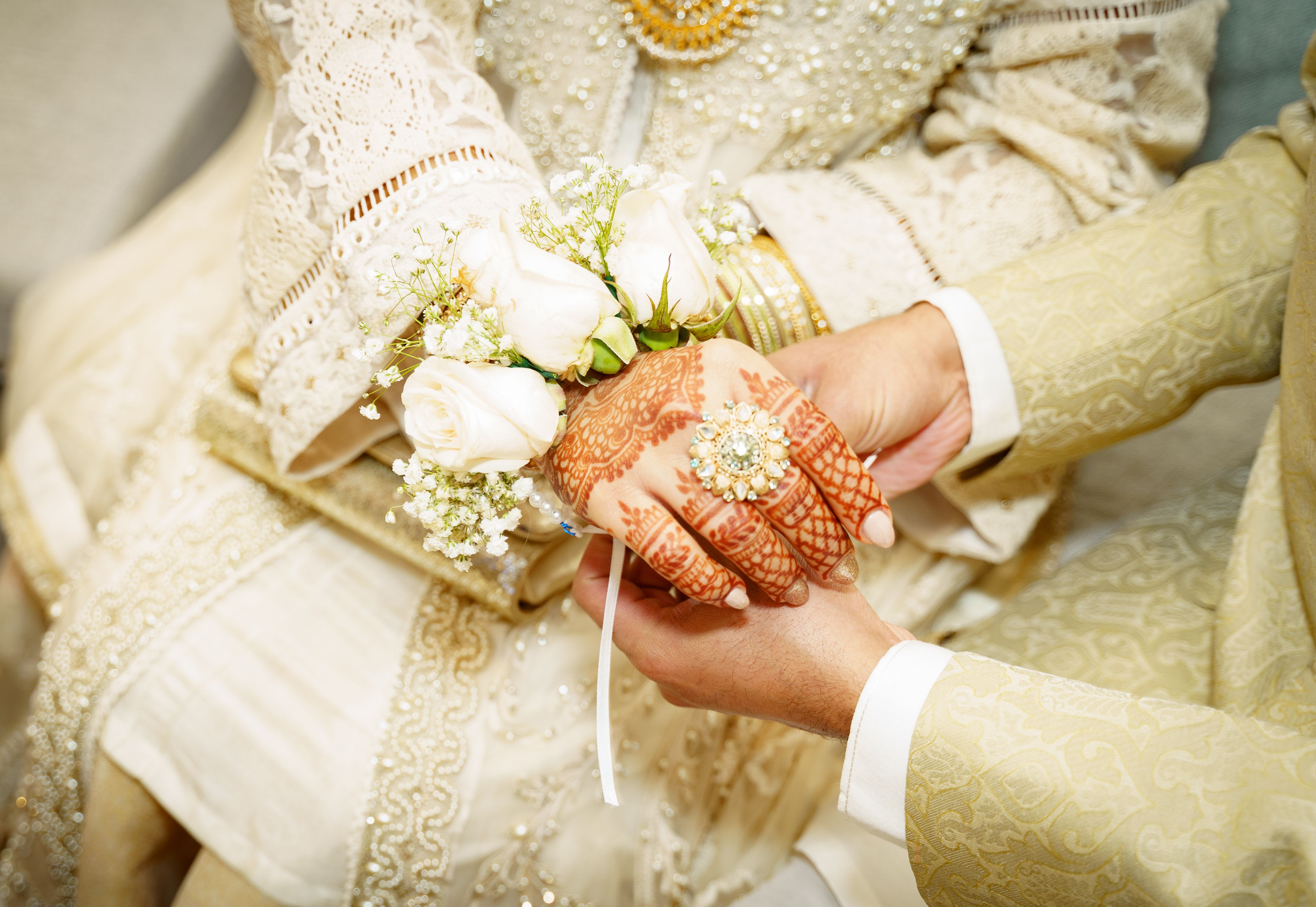

A nikah is fully valid as an Islamic religious contract — but it is not automatically recognised as a legal marriage by civil law in the United States, United Kingdom, Canada, or most Western countries. This means a nikah alone provides no civil legal protections: no inheritance rights through the court, no automatic next-of-kin status, no legal recourse in divorce proceedings, and no child custody framework through civil courts. Islamic scholars across Western countries now strongly and consistently advise completing both a nikah and a registered civil marriage.
What does a nikah give you that a civil marriage does not?
A nikah is a sacred covenant between two people before Allah — the foundation of an Islamic marriage in the eyes of Allah and the Muslim community. It establishes the religious validity of the union, the obligations of husband and wife under Islamic law, the mahr as a binding right, and the couple's standing as married within their faith community.
What it does not give you — in countries where nikah is not recognised by civil law — is any of the legal protections a state-registered marriage provides. No next-of-kin rights in a hospital. No automatic inheritance if your spouse dies without a will. No legally enforceable financial settlement if the marriage breaks down. No civil divorce process. No court-recognised framework for child custody and support.
("The distinction between religious validity and civil legal recognition is one of the most practically consequential issues facing Muslim communities in the West. A nikah-only marriage is real, sacred, and binding in Islamic law — and simultaneously invisible to the civil legal system. The consequences of that invisibility tend to be invisible too, until a crisis arrives: a medical emergency, a death, a divorce. At that point, the absence of civil registration becomes acutely apparent in ways that cannot be fixed after the fact.")
Is a nikah legally recognised in the United States?
In the United States, marriage law is governed at the state level — and no US state automatically recognises a nikah as a civil marriage. A nikah conducted by an imam is not the same as a civil marriage license issued by a county clerk.
Some imams are licensed to solemnise marriages in their state — meaning they can conduct both the nikah and the civil legal ceremony simultaneously, signing the civil marriage license as an officiant. In this case, the couple ends up with both an Islamic nikah and a legally registered civil marriage from a single ceremony.
However, this only applies when the imam is specifically licensed in that state and when a civil marriage license has been obtained beforehand from the county clerk. Many nikah ceremonies — particularly those conducted privately, by unlicensed scholars, or without a prior civil license — do not produce a legally registered marriage regardless of how religiously valid they are.
("A 2022 survey by the Institute for Social Policy and Understanding found that approximately 1 in 5 Muslim married couples in the United States had a nikah-only marriage with no civil registration. Among these couples, the vast majority were unaware of the specific legal protections they lacked — including the fact that their spouse would have no automatic inheritance rights, no legal next-of-kin standing, and no access to spousal Social Security benefits. The gap between religious and legal marriage status was producing real harm that most couples did not discover until a crisis forced it into view.")
Is a nikah legally recognised in the United Kingdom?
In England and Wales, a nikah is not automatically legally recognised — and this has been the subject of significant legal and community discussion for years.
Under the Marriage Act 1949, a marriage in England and Wales is only legally valid if it is registered with the civil authorities. A nikah conducted in a mosque or privately, without prior civil registration or a civil ceremony, is not a legally recognised marriage under English law — regardless of how widely the community recognises it.
The consequences are specific and serious. A woman in a nikah-only marriage in England and Wales has no right to financial provision from the civil courts upon divorce. She has no automatic right to remain in the matrimonial home. She is not a legal next-of-kin. She cannot access her husband's pension as a surviving spouse.
("The UK Law Commission conducted a review of weddings law and published recommendations in 2022 specifically addressing the situation of religious-only marriages — including Islamic nikahs — that have no civil legal standing. The review found that the current legal framework was causing disproportionate harm to women in faith communities who believed their religious marriage provided legal protection that it does not. As of 2026, legislative reform remains pending — meaning nikah-only marriages in England and Wales remain legally unrecognised, and the harm continues.")
Scotland operates under different marriage law and has somewhat broader recognition of religious ceremonies, but the advice of scholars and legal advisors remains the same: register the civil marriage.
Is a nikah legally recognised in Canada?
In Canada, marriage law falls under provincial jurisdiction — and the general position is similar to the US and UK. A nikah conducted without civil registration does not constitute a legally recognised marriage.
In most provinces, a religious official — including an imam — may be registered as a marriage officiant. When a registered officiant conducts the ceremony and files the required civil documentation, the nikah and the civil marriage can occur together. When this does not happen — when the nikah is conducted privately or by someone not registered as a civil officiant — the religious ceremony has no civil legal standing.
Quebec operates under a distinct civil law system with specific requirements that differ from common law provinces. Muslim couples in Quebec should consult both an imam and a legal advisor about the requirements in their province specifically.
What do Islamic scholars say about civil marriage registration?
The scholarly consensus across Western Muslim communities has become increasingly clear and consistent: register the civil marriage.
This is not a concession to secular culture. It is an application of a fundamental Islamic principle — la darar wa la dirar: there should be no harm and no causing of harm. A nikah-only marriage in a Western legal context predictably and preventably exposes the wife — and children — to serious legal harm. Islamic scholars consider removing that harm an obligation, not an option.
("Sheikh Yasir Qadhi has stated directly in multiple public lectures that Muslim couples in Western countries are obligated to register their civil marriage — not merely recommended to do so. His reasoning follows the Islamic principle of preventing harm: a nikah-only marriage predictably exposes the wife to serious legal vulnerability, and preventing that vulnerability is part of the husband's Islamic obligation to protect and maintain his wife. Mufti Menk has expressed the same position. The European Council for Fatwa and Research issued guidance consistent with this view as early as 2003, and has reaffirmed it since.")
The imam who conducts a nikah without encouraging the couple to also register a civil marriage — or without confirming it has already been done — is in the view of many contemporary scholars failing in his pastoral responsibility.
How do you complete both a nikah and a civil marriage?
The practical pathway differs slightly by country but follows the same general steps.
In the United States:
- Obtain a marriage license from your county clerk's office before the ceremony
- Confirm your imam is a licensed marriage officiant in your state — or arrange for a separate civil officiant
- Have the imam conduct the nikah — if he is licensed, he can sign the marriage license simultaneously
- Return the signed license to the county clerk within the required timeframe (varies by state)
In the United Kingdom:
- Give notice of marriage at your local register office at least 28 days before the ceremony
- Either have the nikah in a registered mosque (the mosque must be registered for marriages and the imam authorised) or conduct a separate civil ceremony at the register office
- Receive your marriage certificate — this confirms both religious and civil validity when conducted in a registered venue
In Canada:
- Confirm your imam is registered as a marriage officiant in your province
- Obtain the required marriage license from your provincial authority before the ceremony
- Have the imam conduct the nikah and sign the required civil documentation
- File the documentation with the provincial vital statistics office
("The most common practical failure point is assuming the imam has handled the civil paperwork. Many couples — particularly those who arranged their nikah privately or through family — discover years later that no civil registration was ever completed. Confirming the civil registration in writing, and obtaining the official certificate, is the couple's own responsibility — not something to assume has been done.")
What if I only have a nikah and no civil marriage — what can I do?
If you are in a nikah-only marriage and want to gain civil legal protections, the solution is straightforward in most cases: complete a civil marriage registration.
In the US, UK, and Canada, couples who are already religiously married can complete a civil ceremony — even a simple one at a registry office or county clerk — to gain legal recognition. This does not invalidate the nikah or require repeating it. It adds the civil legal layer that the nikah alone does not provide.
If your nikah-only marriage has already broken down and you are seeking legal recourse — particularly in England and Wales — the situation is more complex. Some legal pathways may be available depending on the length of cohabitation and other factors. Consulting a family law solicitor or attorney with experience in religious marriage cases is essential in this situation.
Soul Deeds provides access to imams and Islamic advisors through in-app booking who can help navigate the Islamic dimensions of this question. For the civil legal dimensions, a qualified family law professional in your jurisdiction is the right resource.
Frequently Asked Questions
Can an imam legally marry you in the US? Yes — if the imam is a licensed marriage officiant in the state where the ceremony takes place and if a valid civil marriage license has been obtained beforehand. When both conditions are met, the nikah and the civil marriage can be completed in a single ceremony. When either condition is absent, the nikah is Islamically valid but not legally registered.
Is a nikah-only marriage valid in Islam? Yes — a nikah conducted with all its Islamic requirements met is fully valid as an Islamic marriage, regardless of whether it is also registered as a civil marriage. Islamic validity and civil legal recognition are separate questions. The concern is not Islamic validity but the serious practical harm that can result from having no civil legal protections.
What rights does a wife lose without a civil marriage registration? In most Western countries: the right to financial provision through civil courts on divorce, inheritance rights without a will, next-of-kin status in medical situations, access to spousal pension benefits, and court-recognised standing in child custody proceedings. These protections are only available through civil marriage registration — the nikah alone does not provide them.
Is Soul Deeds a dating app? No. Soul Deeds is a Muslim matrimonial platform for people seriously seeking marriage. Members are verified, and connections form through shared community service projects rather than swiping.
Can I speak with an imam through Soul Deeds about nikah and civil marriage? Yes. Soul Deeds includes in-app booking with advisors — imams, scholars, and marriage and relationship coaches — who can provide guidance on the nikah process and related questions.
Is Soul Deeds free? Yes — Soul Deeds is free to join, on iOS, Android, and the web.